


Mobility Steps for Front Doors, Higher Steps & Outdoor Access
A high step at a front door, back door or outdoor entrance can make getting in and out of a property more difficult, particularly for older people and those with reduced mobility. A mobility step can reduce the height of the step that needs to be managed in a single movement, while providing a stable platform for standing.
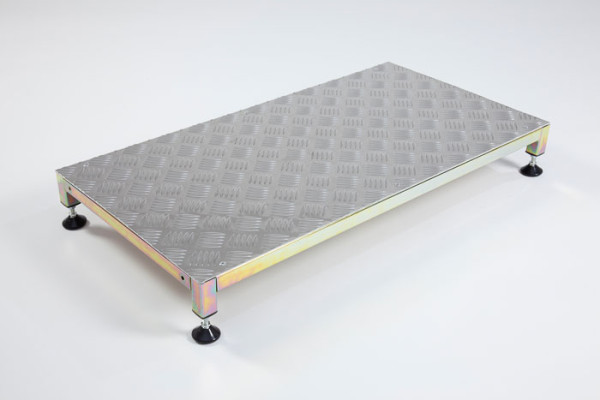
At The Ramp People, our adjustable mobility steps are available in a range of sizes and configurations, with or without handrails. Our higher-height mobility step can now be adjusted to heights of up to 230mm, providing a solution for entrances and raised areas where a standard half step may not be suitable.
For higher entrances, you can also position two mobility steps one in front of another to create a series of smaller steps. This can provide a more gradual way to reach a higher entrance where sufficient space is available.
Mobility Step for Front Door Access
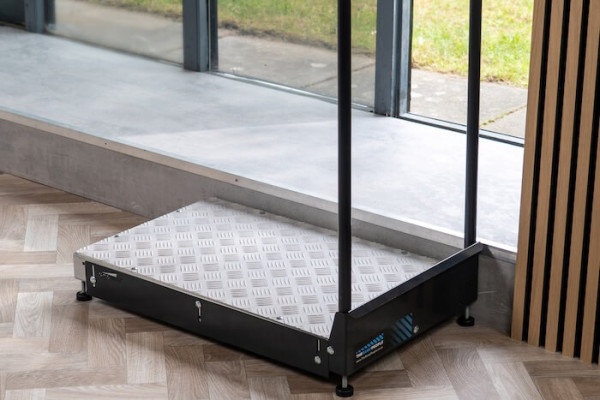
A mobility step for a front door can be useful where there is a raised entrance, threshold or external step that is difficult to manage.
The step creates an additional, stable level between the ground and the entrance, reducing the height of the individual step. This can make stepping into and out of a property easier for people who find larger changes in level difficult to manage.
The wide platform also provides a stable place to stand outside the property. This can be particularly useful when:
- Opening or closing a front door
- Carrying shopping or other items into the home
- Using a walking stick, frame or rollator
- Moving between the home and garden
- Taking a moment before stepping up or down
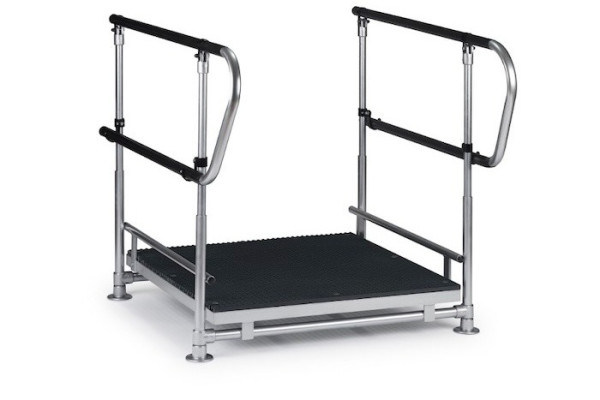
A single or dual handrail can also be added for users who would benefit from additional support when stepping up and down.
Mobility Steps for Higher Heights
Not every entrance has a standard-sized step. Older properties, raised entrances, static homes and outdoor areas can have higher changes in level that require a different solution.
Our top-selling half step is now available in heights up to 230mm, allowing you to safely overcome high steps and doorways.
Where there is enough space, two mobility steps can be positioned one in front of another. This creates a series of smaller steps rather than asking the user to overcome one larger step.
For example, rather than stepping directly from ground level to a high entrance, two mobility steps can create an intermediate level before reaching the doorway.
When planning a two-step arrangement, consider the height of the existing entrance, the height of each step and the space available. The most suitable configuration will also depend on the user's mobility needs.
For some situations, a ramp may be more appropriate, particularly where the user needs wheelchair or mobility scooter access.

Adjustable Mobility Step
- Use as a portable step or secure in position
- Choose from no handrails, a single handrail or dual handrails
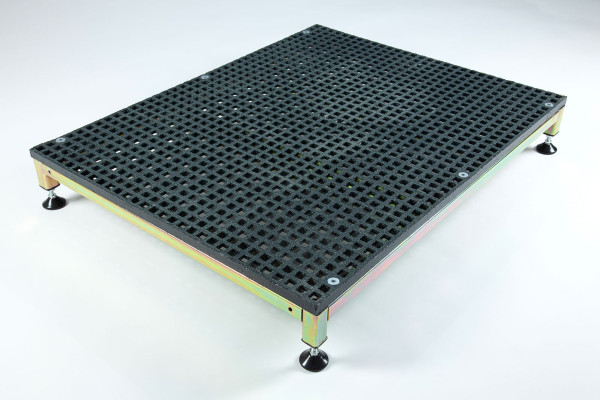
- Full-width GRP grip surface for enhanced safety
- Self-draining surface, prevents water pooling
- Adjustable to heights up to 230mm
- Weather-resistant design, anti-rust zinc-alloy frame
- Two-year warranty
- Made in Britain
How to Choose a Mobility Step for Your Front Door
Before choosing a mobility step, measure the height from the ground to the level you need to reach. You should also consider:
- Step height: How high is the existing step or entrance?
- Available space: Is there enough room for one step or would two steps fit?
- Platform size: How much standing space does the user require?
- Mobility aid: Will the step be used with a walking stick, frame, rollator or another walking aid?
- The mobility steps are available in a choice of 3 sizes. If you are walking on the step we recommend a standard size step. For those using walking sticks, frames and crutches, a large step is often preferred. For those using rollator walkers and tri-walkers, an extra-large step is recommended.
- Handrails: Would a single or dual handrail provide useful additional support?
- Indoor or outdoor use: The surrounding area and surface should be considered when planning the installation.
For higher entrances, using two mobility steps can be an option where there is sufficient space to create a series of smaller steps.
If you are unsure which size or configuration is suitable, contact our team for advice.


Adjustable Half Step with Handrails: A Safer Mobility Solution for Home Access

Extra Large Half Step For Rollators - New Product Alert

Mobility Steps With Handrails: Enhancing Safety and Independence
- Categories:
- All
- Vehicle & Plant Loading Ramps
- Wheel Stops
- Workplace Safety
- Speed Bumps
- Accessibility & Disability
- Wheelchair Threshold Ramps
- Truck & Van Ramps
- Cable Covers & Protectors
- Road Safety
- Yard & Container Ramps
- TRP News
- Pet Ramps
- Car Ramps
- Tips and Product Guides
- Customer Case Studies
- Wheelchair Ramps
- Loading Ramps
- Workplace and Health & Safety