


RollAble Ramp vs Folding Wheelchair Ramps: Which Is Best?
Whether you need to overcome steps, access your home or garden safely, bridge a doorway threshold or improve accessibility at your business or event, a wheelchair ramp can help create a safer and more accessible route.
With a wide range of solutions available, including folding wheelchair ramps, fixed wheelchair ramps, bridge ramps, rubber threshold ramps, telescopic ramps and RollAble ramps, choosing the right option can feel overwhelming.
In this article, we compare folding wheelchair ramps with RollAble wheelchair ramps from The Ramp People, exploring the key differences to help you find the best solution for your needs.
Both ramp types can be suitable for wheelchair users, mobility scooter users, people using walking aids and those walking up the ramp themselves, provided the chosen model is appropriate for the intended use. However, each offers different benefits in terms of portability, length, width, storage and installation. The best option depends on your access requirements, available space and how you plan to use your ramp.
Rollable vs Folding Wheelchair Ramps: What's the Difference?
The main difference is how the ramps are stored and whether their length can be adjusted.
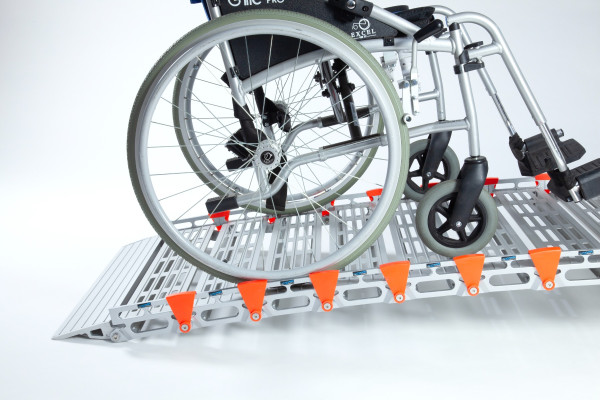
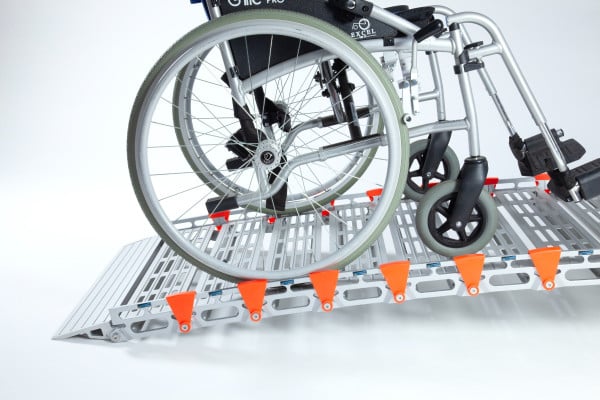
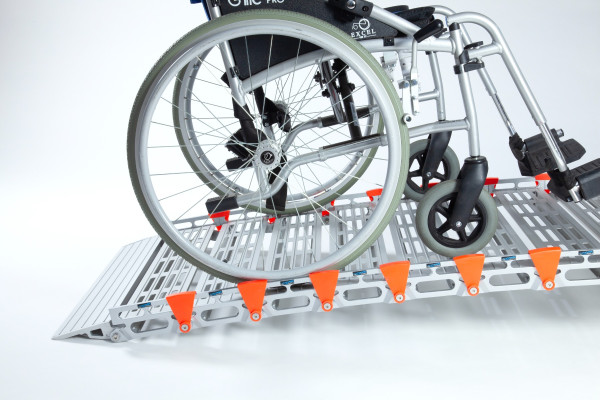
A RollAble ramp, also referred to as a roll up ramp, is made up from aluminium sections that roll up for storage and transportation. Its modular design allows you to add or remove sections to create the required length, making it particularly useful for those seeking a longer ramps or situations where access requirements may change. The modular, flexible design allows the ramp to be used as a straight ramp to overcome steps or as a bridge ramp to go up and over doorways making it perfect for a range of situations. With A R13 slip-resistance rating, it can be used in all weathers and can be bolted down and left outside for those seeking a more permanent access solution.
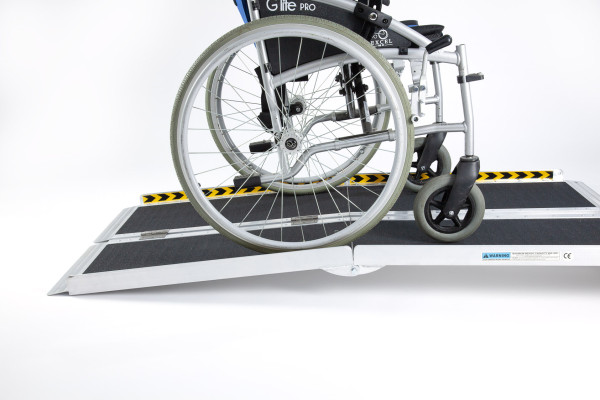
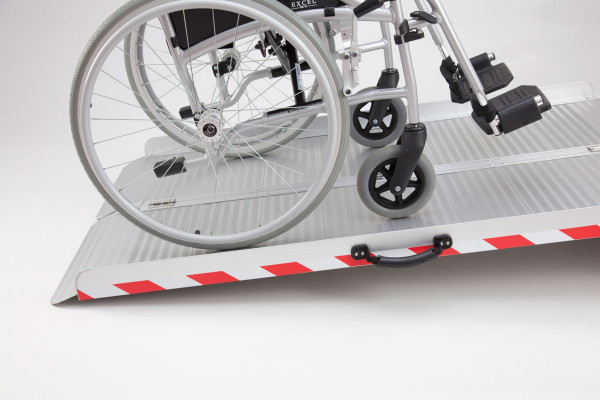
A folding wheelchair ramp folds into a more compact shape for storage. Depending on the model, it may fold in half like a book or feature a multi-fold design that folds both lengthways and widthways. Folding ramps are available in a range of fixed lengths, making them a practical choice when you know exactly how long your ramp needs to be. In general folding ramps can be purchased in lengths from 2ft - 10ft. For those seeking a longer solution, a joining support needs to be purchased to connect two ramps together.


Rollable vs Folding Wheelchair Ramps Compared
| Feature | Rollable Wheelchair Ramp | Folding Wheelchair Ramp |
|---|---|---|
| Price | Generally more expensive, particularly for longer configurations. | Generally more affordable for straightforward access requirements. |
| Available lengths | Modular design allows sections to be added or removed to create the required length, including extra-long ramps. | Generally available in fixed lengths up to 10ft. Longer solutions may require connecting compatible ramps. |
| Adjustable length | Sections can be added or removed to suit different step heights or locations. | Fixed length that cannot be adjusted. |
| Available widths | A wider choice of widths to suit narrow doorways and wider wheelchairs or mobility aids. | Width options depend on the model. |
| Storage design | Rolls up into a compact bundle and can be separated into sections. | Available in book-fold or multi-fold designs. |
| Portability | Can be separated into sections for transportation and adjusted when needed. | Folds into a compact shape for transportation and storage. |
| Handrails | Optional handrails are available on compatible models. | No handrails. |
| Outdoor use | Suitable for outdoor use and can be left in position when appropriately installed. | Generally designed to be positioned when required and put away after use. |
| Securing in position | Can be secured in position using compatible fixings purchased separately. | Generally not intended to remain installed in situ. |
| Doorway access | Can be used as a straight ramp or configured to bridge certain doorways and raised thresholds, depending on the entrance and ramp configuration. | Designed for straight access. An additional threshold ramp, such as a suitable rubber ramp, may be needed to bridge raised doorways, including some uPVC thresholds. |
| Best suited to | Extra-long ramps, longer-term access, varied doorway widths and changing access requirements. | Customers looking for an affordable, portable solution with a fixed length for straightforward access. |
The suitability of either ramp depends on the chosen model, the height being overcome, the available space and the mobility equipment being used. Always check the manufacturer's load capacity and maximum recommended loading height before purchasing.
Are RollAble and Folding Wheelchair Ramps Safe to Use?
Both RollAble ramps and folding wheelchair ramps can provide safe access when the correct ramp is selected and used according to the manufacturer's instructions. However, it's important to consider the height you need to overcome, the ramp gradient, the mobility aid being used and the available space.
Before choosing a wheelchair ramp, consider the following:
-
Ramp length and gradient: The ramp must be long enough to provide a suitable gradient for the user and their mobility aid. A ramp that is too steep can make access difficult or unsafe.
-
Weight capacity: Check that the ramp's maximum load capacity is suitable for the combined weight of the user and their wheelchair or mobility scooter.
-
Width and stability: Ensure the ramp provides sufficient usable width and sits securely in position, with no rocking or movement during use.
-
Top and bottom transitions: Check that the ramp meets the upper landing or threshold securely and that the transition at each end is suitable for the mobility aid.
-
Surface conditions: Keep the ramp free from debris and check the manufacturer's guidance for use in wet or outdoor conditions.
Always follow the manufacturer's installation and usage instructions. If you're unsure which ramp length or design is suitable, seek advice before purchasing.
Rollable Ramps for Higher Steps, Multiple Steps & for Those Seeking a Long Ramp
One of the biggest advantages of a RollAble wheelchair ramp is that it can be created to the length you need. Available in lengths from 3ft upwards, its modular design makes it ideal for overcoming multiple steps, higher entrances and other raised areas where a longer access ramp is required.
Having the right ramp length is important for achieving a suitable gradient. A longer ramp can provide a gentler incline, making it easier to navigate for wheelchair users and those using mobility scooters, provided the gradient is appropriate for the user and mobility aid.
It's important to consider the weight of the ramp when choosing a longer model. The longer the ramp, the heavier it will be, which can make regularly lifting and repositioning it more difficult. For longer ramps, such as a 15ft model, customers often prefer to leave the ramp in position for weeks, months or even years. Compatible fixings are available to secure the ramp in place where required, making it a practical option for longer-term access.
Adjust the Length of Your Ramp as Your Needs Change
Another advantage of the RollAble ramp's modular design is that its length can be adjusted by adding or removing sections. This offers greater flexibility than a folding wheelchair ramp, which has a fixed length.
For example, you might initially purchase a ramp for use with an assisted manual wheelchair and choose a shorter length, provided the gradient is suitable. If your requirements later change and you want to use a mobility scooter, you can purchase additional sections to extend the ramp and create a gentler gradient, provided you have sufficient space.
The same flexibility can be useful if you move to a different property with a higher or lower entrance. Rather than necessarily purchasing an entirely new ramp, you may be able to adapt your existing RollAble ramp by adding or removing sections to suit the new access height.
RollAble ramps are also popular in the events sector, thanks to their modular design. The ramp can be reconfigured to different lengths as required, making it a versatile solution for event organisers who need to provide accessible routes across multiple areas or at different venues where staging heights and entrance heights may vary.
This makes RollAble ramps a versatile option for those whose access requirements may change over time.
Easy to Store and Transport
Although rollable ramps can be longer than many folding alternatives, they can be rolled up for storage. The modular design also allows the ramp to be split into sections with an allan key, making it more manageable to transport and store.
Flexible Design
One of the key advantages of the RollAble ramp is its versatility. Unlike many conventional ramps, it can be configured as a straight ramp to overcome steps or as a bridge ramp to go up and over certain doorways and raised thresholds. This makes it particularly useful for entrances with uPVC door frames, where the raised threshold can make access more challenging.
Optional handrails are also available, allowing you to add a single or double handrail to compatible ramp configurations for additional support and stability. This can be particularly beneficial for people using walking aids or those who prefer extra support when walking up and down the ramp. Handrails are generally recommended when overcoming greater heights, especially in public or shared-access areas where the ramp may be used by a variety of peop
Folding Wheelchair Ramps: A Convenient Portable Solution
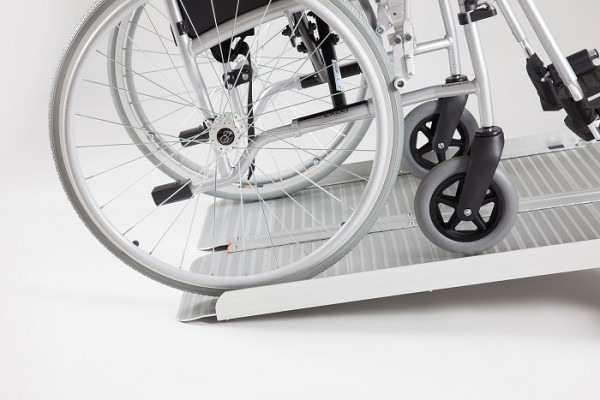
Folding wheelchair ramps are another popular choice for overcoming steps, kerbs and raised doorways. Their main advantage is their straightforward design: unfold the ramp, position it correctly and use it as required.
Unlike rollable ramps, folding wheelchair ramps are manufactured in set lengths. This makes them a practical choice if you know the height you need to overcome and have enough space for the chosen ramp length.
Foldable ramps are commonly used to provide access to homes, businesses and gardens.
Choose Between Book-Fold and Multi-Fold Designs
Folding wheelchair ramps are available in different designs, depending on how compact you need the ramp to be when stored.
Book-fold wheelchair ramps/suitcase ramps: These ramps fold like a book for storage. When stored, they remain the same length. At The Ramp People, we offer options from 2ft - 8ft.
Multi-fold wheelchair ramps: These ramps fold both lengthways and widthways, reducing their length and width when stored for a more compact solution. Some models can also be separated into two sections, with each section folding to half its original length. This can make the ramp easier to lift, carry and store. We offer multi-fold solutions in lengths from 4ft - 10ft. For those seeking to store the access ramp in the car boot, the multi-fold design is often preferable over the standard folding design, especially for longer ramp lengths.
A Straightforward Choice for a Specific Doorway or Step
If you need a ramp for a particular step or doorway and do not expect the access requirements to change, a folding ramp may be all you need.
For example, if you want to keep a ramp in your vehicle to provide access at a regular destination, a suitable folding model can be convenient to carry and position when required.
However, because the length is fixed, it is important to choose the correct model from the outset. If you move to a property with a higher entrance or need to overcome a different step height, your existing ramp may no longer provide the required gradient.
Using Folding Wheelchair Ramps for Heigher Heights and Bridging Doorway Thresholds
Connecting folding wheelchair ramps for longer access: Folding wheelchair ramps are generally available in lengths up to 10ft. If you require a longer ramp, you can use a joining support to connect two ramps together. If you are concerned by the ramp weight, you can also used a joining support to connect two shorter ramp lengths together, for example connect 2 x 4ft folding ramps to create an 8ft ramp.
Using folding ramps over uPVC doorways: uPVC doorways often have raised thresholds both internally and externally, which can make access more challenging. Folding wheelchair ramps are designed for straight access, so an additional rubber ramp or standard threshold ramp is usually needed to bridge the height difference and create a smoother transition up and over the doorway. Check the measurements and ensure the complete setup is stable and suitable for the wheelchair or mobility aid being used.
Which Ramp Is Easier to Transport?
Both RollAble and folding wheelchair ramps are designed to be portable, but their storage and handling requirements differ.
A folding ramp has the advantage of folding into a compact shape, with a carry handle on compatible models. This can make it convenient for regular transportation between locations.
A RollAble ramp can be rolled up and separated into sections, which may be useful when you need to carry the ramp in smaller pieces or store it in a restricted space.
However, neither design is automatically lighter than the other. The weight depends on the ramp option chosen and, where possible, whether you wish to split the ramp. We always recommend checking the size of the area available and ramp length prior to purchase.
Before purchasing, consider:
-
Whether you will need to lift the ramp yourself.
-
The amount of storage space available.
-
Whether the ramp needs to fit inside a car boot.
-
How frequently you will transport and reposition it.
-
Whether you would benefit from splitting the ramp into sections.
If you need a particularly long ramp, consider the weight and handling requirements carefully, even if the ramp can be rolled up. In most instances the longer RollAble ramps are left in position due to the weight.
Which Ramp Is Best for Wheelchair Access at Home?
The right ramp depends on the entrance you need to access and whether you want a temporary or longer-term solution.
A folding wheelchair ramp may be suitable if you need to overcome a single step or doorway and a standard ramp length provides an appropriate gradient.
A RollAble ramp may be the better choice if you have a higher entrance, need a longer ramp or want the flexibility to adjust the length in the future. RollAble ramps are also great for narrow doorways as most folding ramps are at least 72cm wide.
For example, if you are renting a property and need a removable access solution, either type may be worth considering, provided it can be positioned safely and meets your access requirements.
If you are planning a more permanent access solution, you may also wish to consider a modular wheelchair ramp system, particularly where turning platforms and handrails are required.
For advice you can always contact our team. Simply send over pictures and measurements of the area via email or WhatsApp and we can help advise the most suitable ramp for your area.
How Do You Choose the Correct Ramp Length?
Whichever ramp design you choose, selecting the correct length is essential for safe and practical access.
Start by measuring the vertical height from the ground to the surface you need to reach. Then consider the available space for the ramp, the type of wheelchair or mobility scooter being used and the manufacturer's recommended gradient.
A ramp that is too short may create a steep incline that is difficult or unsafe to negotiate.
A longer ramp can provide a more gradual incline, but it also requires more space and may be heavier to handle.
Rollable ramps offer an advantage if you need to adjust the length because of changing access requirements. Folding ramps, meanwhile, are a suitable option when a fixed length meets your needs.
If you are unsure which ramp is appropriate, The Ramp People can help you identify a suitable solution using your measurements and photographs of the entrance.
We also have a handy Ramp Length Calculator which can help you quickly identify the minimum ramp length you need for your doorway or steps.
Find the Right Wheelchair Ramp for Your Needs
Both RollAble and folding wheelchair ramps can help improve access over steps and raised entrances. The best option depends on your access requirements, available space and how you plan to use the ramp.
Choose a folding wheelchair ramp if you need a straightforward portable solution with a fixed length that suits your entrance.
Choose a rollable ramp if you need a longer ramp, want to adjust its length or would benefit from a flexible solution that can adapt to different locations and changing access requirements.
Explore The Ramp People's range of wheelchair ramps or contact our team for help choosing the right ramp for your needs.

Freestanding Wheelchair Ramps: A Guide to Doorway Access Without Permanent Alterations

Modular Threshold Ramps for Flexible Access From Any Direction

How to Make a Home More Accessible: A Real-Life Adjustable Threshold Ramp
- Categories:
- All
- Vehicle & Plant Loading Ramps
- Wheel Stops
- Workplace Safety
- Speed Bumps
- Accessibility & Disability
- Wheelchair Threshold Ramps
- Truck & Van Ramps
- Cable Covers & Protectors
- Road Safety
- Yard & Container Ramps
- TRP News
- Pet Ramps
- Car Ramps
- Tips and Product Guides
- Customer Case Studies
- Wheelchair Ramps
- Loading Ramps
- Workplace and Health & Safety