



Loading Vehicles Safely: Choosing the Right Equipment for Containers, Lorries and Vans
Many UK businesses rely on deliveries by containers, lorries and trucks to keep essential stock moving, whether it's food, medicines, clothing or household goods. Whether you're a small, medium or large business, safely loading and unloading vans, trailers and HGVs is essential to ensure goods are handled quickly and efficiently before reaching your customers.
Maintaining safe and efficient loading operations helps keep deliveries on schedule, improves productivity and supports customer satisfaction. It also plays a vital role in protecting your workforce by reducing the risk of accidents and helping your business comply with health and safety legislation, including the Work at Height Regulations 2005.
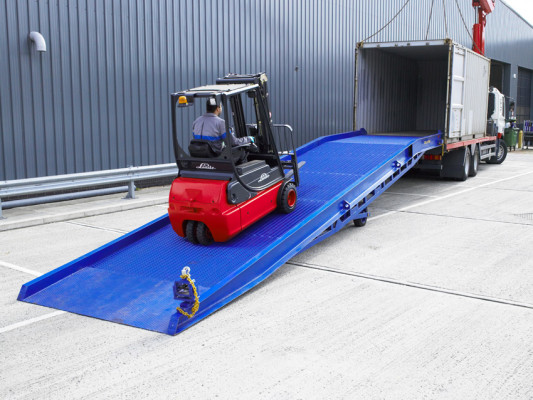
The way you decide to load goods into elevated shipping containers, lorries and trailers often varies depending on the product you sell, the volume of product you are importing and exporting and the space you have on site. Unlike ground-level containers, shipping containers delivered on HGV trailers require either elevated access equipment or forklift-access ramps to safely load and unload goods.For those importing and sending goods on pallets, a forklift is often utilised. For those with a large site, a Mobile Yard Ramp is a popular choice as it allows forklifts and pallet trucks to access containers located on artic lorries and HGVs. In instances where boxes and smaller items are being loaded, Mobile Platform Steps are often a popular solution.
How to choose the right loading solution
Will the items be palletised, in boxes, on cages or on wheels? Are the items fragile and need additional care?
Consider the cost of the items and maintenance costs, for example forklifts require charging and include electronic components so are more prone to requiring repairs.
Can team members safely lift the items or is machinery required - consider manual handling requirements.
Yard ramps are large so require a large storage area. Some mobile ladders are very tall so a rolling shutter is required to ensure they can go inside the building.
For occasional use, a mobile ladder is often a cost-effective solution. For regular use, investing in a reach truck may be preferable.
Ensure the solution meets health and safety requirements such as manual handling requirements. For forklifts, ensure your team have the required license.
How to Load Goods into Shipping Containers, Lorries and Trailers
There is a wide range of loading solutions available for businesses, whether you operate a warehouse, e-commerce fulfilment centre, manufacturing facility, construction site, or self-storage unit. The most suitable loading method depends on the type of goods being handled, the vehicles being loaded, and how frequently loading takes place.
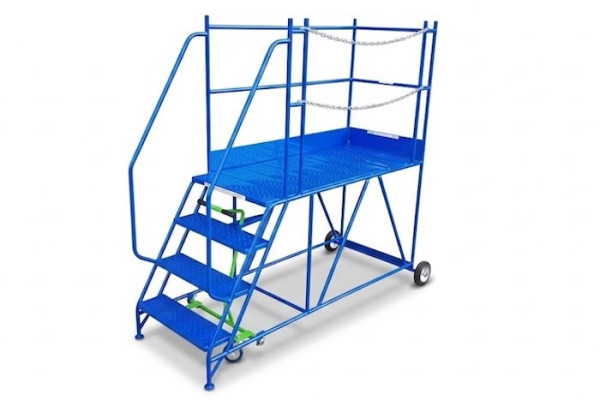
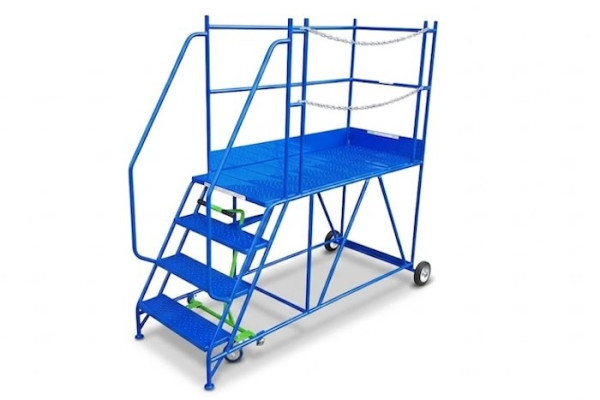
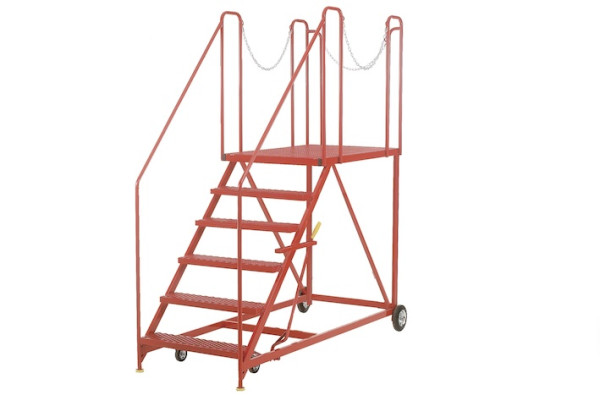
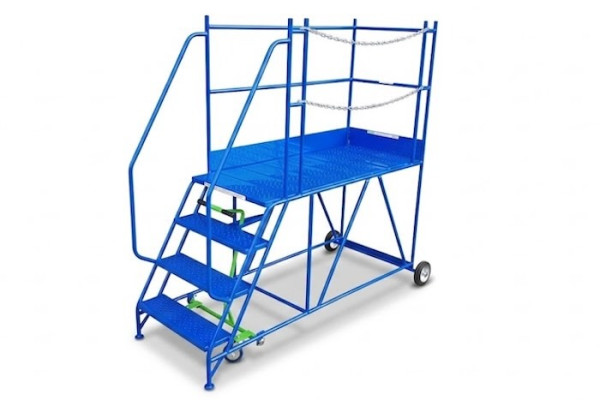
- Mobile Access Platforms – A mobile access platform is a step ladder with a spacious working platform and one-sided access, allowing operators to safely access the side of a vehicle or container. Users can walk up onto the platform before lifting and moving smaller items or equipment onto the vehicle bed. This solution is ideal for manual handling tasks where forklifts are not required.
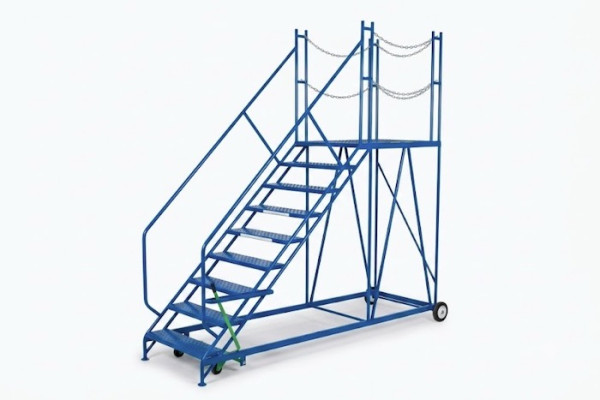
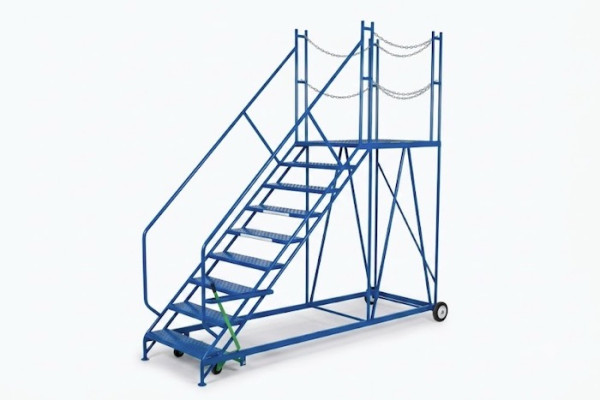
Example: An e-commerce fulfilment centre may use a mobile access platform when manually loading parcels into courier vans, while palletised orders for retailers would typically be loaded using a reach truck. - Truck Dock Platform Steps – Similar to a mobile access platform, truck dock platform steps provide a spacious working platform but offer three-sided access, giving operators greater flexibility when loading or unloading vehicles. This design is particularly beneficial in busy loading bays or areas with limited space.
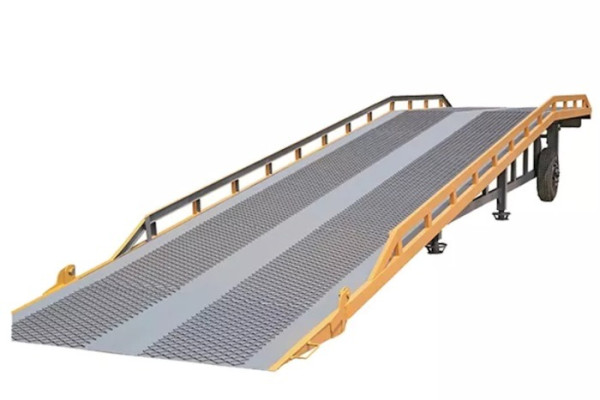
Example: A distribution centre receiving daily deliveries can use truck dock platform steps to provide warehouse staff with safe access to HGV trailers when loading or unloading parcels, boxes, or loose goods. - Mobile Yard Ramps – Mobile yard ramps are heavy-duty, height-adjustable ramps designed to allow forklifts and pallet trucks to drive directly into containers or vehicles. With load capacities generally up to 10,000kg, they are ideal for loading palletised goods, heavy equipment, and machinery. Due to their size, however, they require sufficient outdoor space for storage and manoeuvring.
Example: A distribution centre receiving shipping containers on articulated lorries can use a mobile yard ramp to allow forklifts to drive directly from ground level into the elevated container on the trailer for fast and efficient unloading. - Reach Trucks – A reach truck is an electric forklift designed to lift and transport palletised goods, particularly within warehouses that use high racking. Reach trucks enable operators to efficiently move pallets between storage locations and loading bays. However, they are only suitable for palletised goods, require trained operators, and need regular maintenance and battery charging.
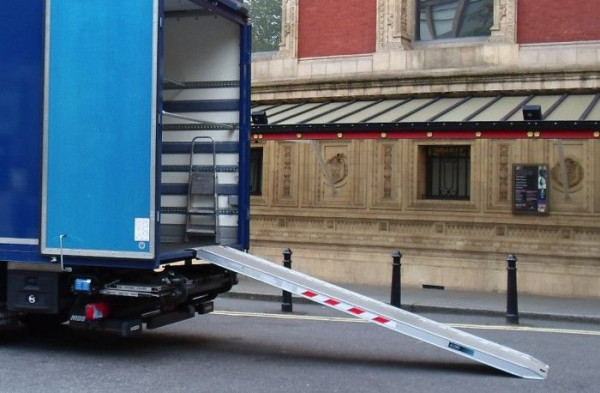
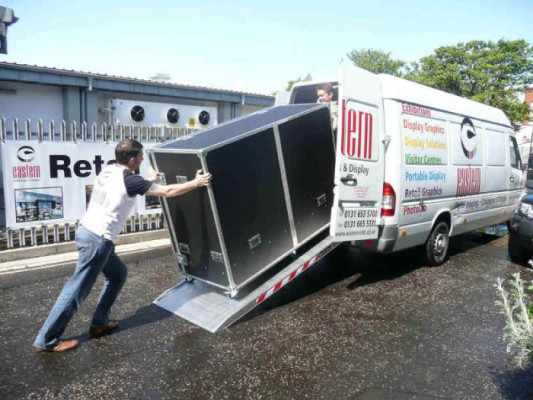
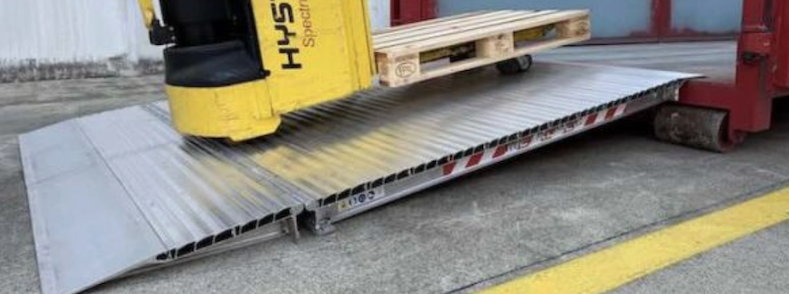
Example: A distribution warehouse may use a reach truck to retrieve palletised goods from warehouse racking before loading them onto an HGV for delivery to regional distribution centres or retail stores. - Truck Ramps and Van Ramps – Aluminium loading ramps provide a simple and cost-effective solution for loading vans using manual pallet trucks, roll cages, or by carrying goods by hand. Due to the low ground clearance of pallet trucks and roll cages, longer ramps are often required to achieve a safe gradient. As a result, aluminium loading ramps are generally more suitable for vans and lower vehicle beds than articulated lorries as longer ramps can become quite heavy.
Example: Event production companies often use aluminium loading ramps to load flight cases, staging equipment, lighting, and audio equipment into vans and trailers. - Tail Lifts – Tail lifts are hydraulic platforms fitted to the rear of many commercial vehicles. They raise and lower goods between ground level and the vehicle bed, allowing operators to safely load trolleys, roll cages, and heavy items with minimal manual lifting. As tail lifts are vehicle-mounted, it is important to confirm with your courier or transport provider that the vehicle attending your site is equipped with one. Like any mechanical equipment, tail lifts require regular servicing and maintenance.
Example: Courier and logistics companies commonly use vehicles fitted with tail lifts to load and unload roll cages, pallets, and bulky goods where a loading dock is not available. - Loading Bridge – Where a loading bay is the same height as the vehicle, a loading bridge can be used. The aluminium bridge rests on the loading bay and vehicle to create a bridge, allowing users to safely roll pallets and cages from the loading bay onto the vehicle. A loading bridge is only viable where the loading bay is in line with the vehicle, they do not work where there are large height differences.
Example: A company has a loading bay located above ground level. The HGV pulls into the loading bay and the bridge is rested on the bay and vehicle allowing team members to move palletised goods on pallets from the bay into the vehicle.
Load and unload safely: Health & Safety Considerations
When lifting, moving, and transporting goods, it is essential to prioritise safety. Before carrying out any loading or lifting operations, a suitable risk assessment should be completed to identify potential hazards and ensure the appropriate equipment and procedures are in place. According to the HSE, 126 workers died in work-related incidents in 2025/6. The most common cause of fatal injuries continues to be falls from a height, representing around a quarter of worker deaths in 2025/26 which is why it is vital your team are able to safely work at height.
Key health and safety considerations include:
- Complying with relevant legislation, including the Manual Handling Operations Regulations 1992 and the Lifting Operations and Lifting Equipment Regulations (LOLER), where applicable.
- Ensuring lifting and loading equipment is regularly inspected and maintained in accordance with the Provision and Use of Work Equipment Regulations 1998 (PUWER) and the manufacturer's recommendations.
- Always following the manufacturer's operating instructions and industry guidance, including the stated safe working load (SWL) or maximum load capacity, and never exceeding these limits.
- Providing appropriate training so that employees are competent to safely operate loading equipment and understand the risks associated with manual handling.
- Inspecting the loading area before use to ensure the ground is stable, the equipment is correctly positioned, and there are no obstacles or slip hazards that could compromise safety.
- Using the correct loading equipment for the task to minimise manual handling, reduce the risk of injury, and improve efficiency.
Benefits of Investing in the Right Loading Equipment
Investing in the correct loading equipment can provide several benefits, including:
- Faster loading times
- Reduced labour costs
- Improved employee safety
- Less product damage
- Increased productivity
- Better use of warehouse space
- Lower long-term operating costs
Mobile Access Platforms: Product Spotlight
Mobile Access Platforms are particularly suited to businesses loading smaller items by hand. Mobile Access Platforms are a cost effective way to allow your team to quickly access vehicles and containers safety. Provided on wheels, they can be wheeled into position to be in line with the vehicle floor. Once in position, secure with the safety brake to prevent the mobile ladder moving. When the user is on the platform, they can simply unclip the safety chain to walk between the mobile steps and platform to collect items or place items on the vehicle.
Unlike traditional folding or telescopic ladders, the Mobile Access Platforms have 4-wheels and support stands, reducing the need for a second user to stand and support the ladder, in turn enhancing efficiency. The spacious working platform and high capacity supports the users and the items they are carrying. The safety chains add an additional layer of safety.
The Ramp People's Loading Solutions
Choosing the right loading equipment for containers, HGVs, lorries and vans is essential for safe and efficient material handling in any warehouse, distribution centre or industrial site. From mobile yard ramps for forklift access into shipping containers on articulated trailers, to mobile access platforms for manual loading of parcels, and truck dock steps for safe HGV access, each solution is designed for a specific loading requirement. The best option will depend on the type of goods being handled, whether they are palletised or manually loaded, the height of the vehicle or container, and the available space on site. By selecting the correct loading solution, businesses can reduce manual handling risks, improve loading times, and operate more safely and efficiently in line with UK health and safety guidance, including the Work at Height Regulations 2005. If you are unsure which loading equipment is right for your operation, our team can help you choose the most suitable solution for your application.
Request a callback
Still need assistance? Our team is available throughout the week to help via phone, email, live chat or WhatsApp. If you’d rather we call you, you can easily request a callback here.
Heavy Duty Hinged Container Ramp - New Product Alert

Heavy Duty Loading Ramps for Plant Machinery

R13 Slip Resistance Loading Ramps
- Categories:
- All
- Vehicle & Plant Loading Ramps
- Wheel Stops
- Workplace Safety
- Speed Bumps
- Accessibility & Disability
- Wheelchair Threshold Ramps
- Truck & Van Ramps
- Cable Covers & Protectors
- Road Safety
- Yard & Container Ramps
- TRP News
- Pet Ramps
- Car Ramps
- Tips and Product Guides
- Customer Case Studies
- Wheelchair Ramps
- Loading Ramps
- Workplace and Health & Safety