



Mobility Aids Buying Guide
Mobility aids play a vital role in helping people stay independent both at home and when out and about. Designed to support everyday activities, these aids make it easier to move safely, access different areas of the home, and remain confident while shopping, travelling, or completing daily tasks. The right mobility aid can enhance stability, reduce pain, and make independent living more comfortable.
Mobility aids are commonly used by older adults, individuals recovering from surgery, and people with long‑term conditions or disabilities. With so many options available, choosing the right product can make a significant difference to comfort, safety, and quality of life.
This buying guide will take you through everything you need to know before choosing a mobility aid. We’ll explain the different types available, who they can benefit, the key features, and what funding or financial support may be available. Whether you’re purchasing for yourself or a loved one, this guide will help you make an informed and confident decision.
This guide will walk you through everything you need to know before buying a mobility aid. We’ll look at the types of mobility aids available and how they can assist to improve your life. We will also look at how and when to use them and what type of funding is available.
What to consider
Different mobility aids are designed to assist with varying levels of mobility, balance and strength. Before choosing a product, it is important to consider your personal needs, medical conditions and abilities.
Many mobility aids are adjustable in size to allow you to ensure it is a comfortable fit. Check the item will suit your body size and that it will fit in the area available, whether it is used in the bathroom or needs to fold for storage.
Safety and comfort is key. With a wide selection of models available, there is a huge selection to choose from whether you are seeking a comfortable seat, a high visibility design or slip-resistant features.
Types of Mobility Aids
There are many different types of mobility aids available, each offering support for a range of conditions and lifestyles. Many people use more than one mobility aid depending on the activity. For example, someone may use a walking stick for short distances at home, but choose a rollator or powerchair when shopping or travelling longer distances.
Mobility aids can benefit the elderly and individuals living with conditions such as arthritis, Parkinson’s disease, multiple sclerosis (MS), heart disease, long‑term balance issues, or those recovering from surgery such as a hip replacement.
If you need help choosing the right mobility aid, or require more details about a specific item, our team is always here to support you. For advice tailored to a medical condition, we recommend speaking with your GP, physiotherapist, or Occupational Therapist.
Walking Aids – Rollators, Walkers and Indoor Trolleys
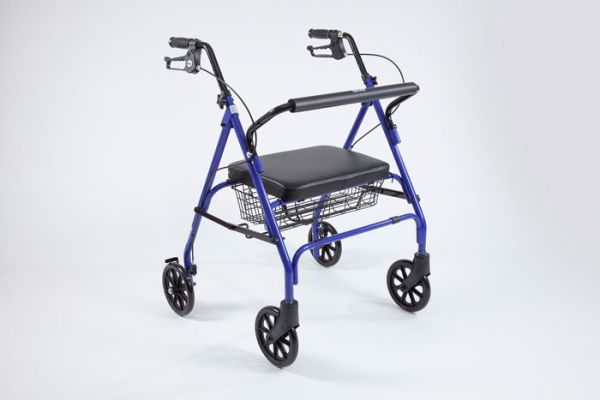
Rollators are wheeled walking aids designed to provide stability and confidence at home or outdoors. Available in 3‑ and 4‑wheeled designs, they often include accessories such as bags, seats, backrests and trays. Models with seats are especially helpful for users who experience pain, fatigue or balance issues, allowing them to rest and reduce the risk of falls.
Indoor rollators and trolleys are designed for safe movement around the home. Typically narrower and with smaller wheels than outdoor rollators, they are ideal for navigating tight spaces including hallways and kitchens. Mobility trolleys are designed to help users safely move items from room to room whilst indoor rollators act as a stable walking aid, along with often including a bag and tray for transporting items.
- For those who need extra support when walking or a place to rest when out and about due to pain or fatigue
- Adjustable height to promote correct posture
- Generally includes a built-in seat and backrest to take a break when needed
- Folding solutions for easy storage at home or in the car boot
- Indoor, outdoor, and all‑terrain options available
- Four-wheels for enhanced stability and support
- Available in lightweight and bariatric models
- Not suitable for those who are unable to stand unaided
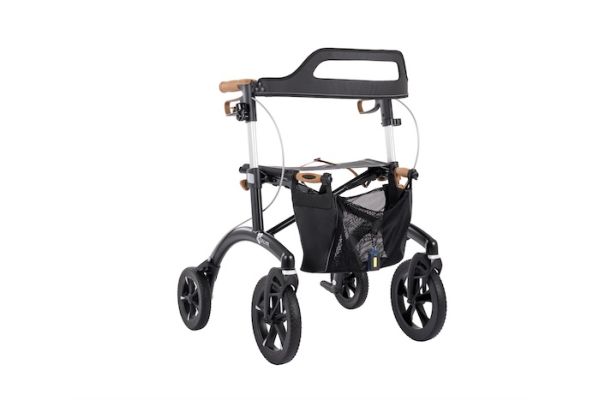
- Support to users when walking indoors or outdoors
- Adjustable height to promote correct posture
- Often includes accessories such as a bag, tray and basket
- Folding designs for easy storage at home or in the car boot
- Designed for indoor or outdoor use
- 3-wheel designs offer excellent manoeuvrability in small spaces and narrow doorways
- Lightweight solutions available
- Does not normally include a seat
- Most users find 3-wheeled solutions are not as stable as the 4-wheeled rollators
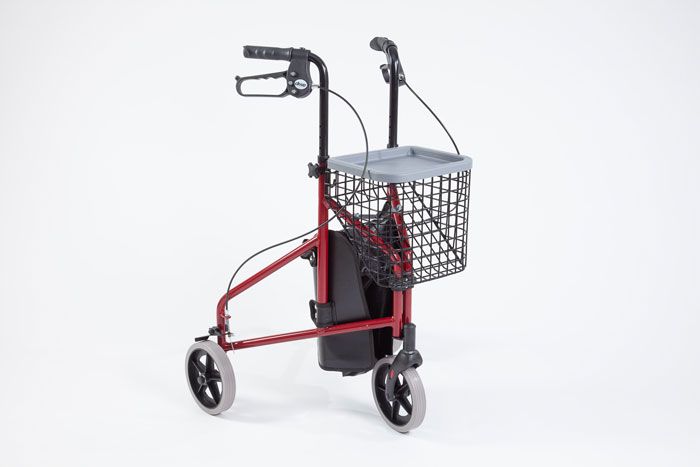
- Provide support around the home and assists users to carry meals, drinks and essentials from room to room
- Height‑adjustable to promote correct posture
- Models often include seats, bags and trays
- Folding options for easy storage
- Narrow frame and small wheels for easier movement through doorways and indoor spaces
- Full‑width brake bar on many models for one‑handed operation
- Designed for indoor use only
- Not suitable for those who are unable to stand unaided
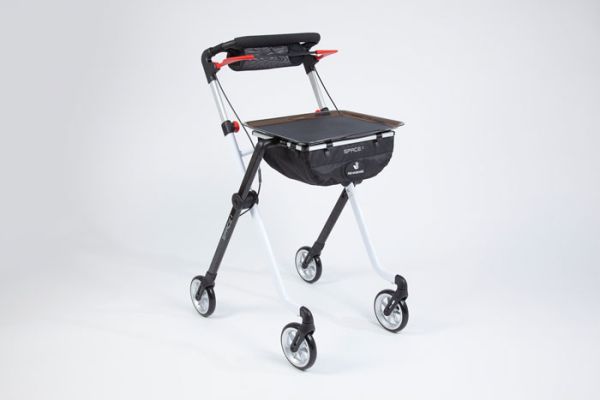
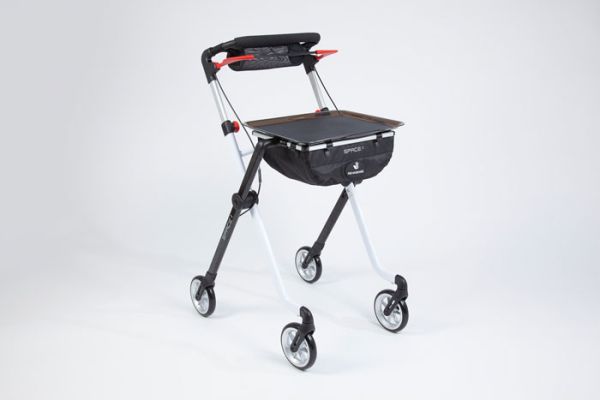
- Assists users to carry essentials, plates and cups from room to room
- Some models offer height adjustment and braking systems
- Includes one or two trays
- Non‑folding design intended for use within the home
- Narrow frame and smaller wheels than rollators
- Promotes independence by enabling users to transport items hands‑free, ideal for those with limited mobility in their hands due to arthritis or weakness
- Does not provide as much support as rollators
- Not designed to support the users weight
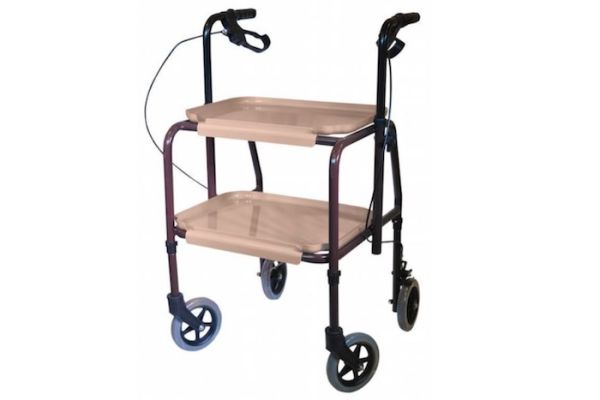
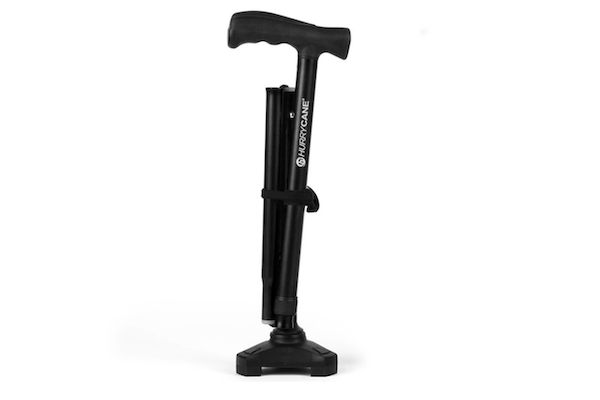
- Designed for those with mild weakness and instability and those recovering from injuries
- Beneficial for those who require minor assistance or for use walking short distances
- Available in various designs including collapsible, lightweight, and all‑terrain models
- Lightweight and adjustable solutions for easy handling and storage
- Many use a walking stick for short distances and a rollator for longer journeys
- Provides less support than a rollator or frame
- Not suitable for those with poor balance
For more help choosing the right rollator, view our Rollator Buying Guide.
4-Wheeled Rollators
- For those who need extra support when walking or a place to rest when out and about due to pain or fatigue
- Adjustable height to promote correct posture
- Generally includes a built-in seat and backrest to take a break when needed
- Folding solutions for easy storage at home or in the car boot
- Indoor, outdoor, and all‑terrain options available
- Four-wheels for enhanced stability and support
- Available in lightweight and bariatric models
- Not for those who are unable to stand unaided
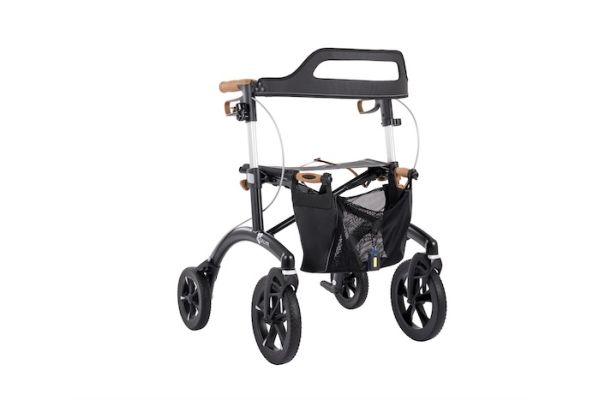
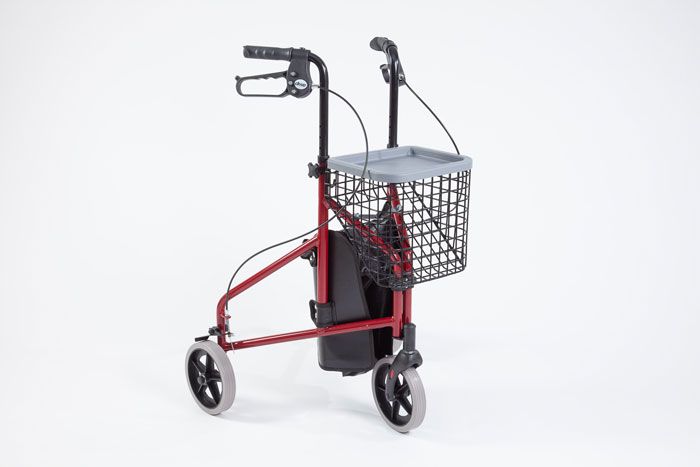
3-Wheeled Rollators
- Supports users walking indoors or outdoors
- Adjustable height to promote correct posture
- Often includes accessories such as a bag, tray and basket
- Folding designs for easy storage
- Designed for indoor or outdoor use
- 3-wheel designs offer excellent manoeuvrability in small spaces and narrow doorways
- Lightweight solutions available
- Does not normally include a seat
- Most users find 3-wheeled solutions are not as stable as the 4-wheeled rollators
Indoor Rollators
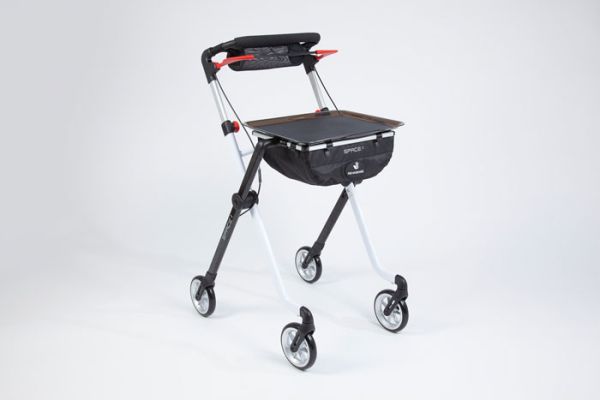
- Provide support around the home and assists users to carry meals, drinks and essentials from room to room
- Height‑adjustable to promote correct posture
- Models often include seats, bags and trays
- Folding options for easy storage
- Narrow frame and small wheels for easier movement through doorways and indoor spaces
- Full‑width brake bar on many models for one‑handed operation
- Designed for indoor use only
- Not for those who are unable to stand unaided
Mobility Trolleys
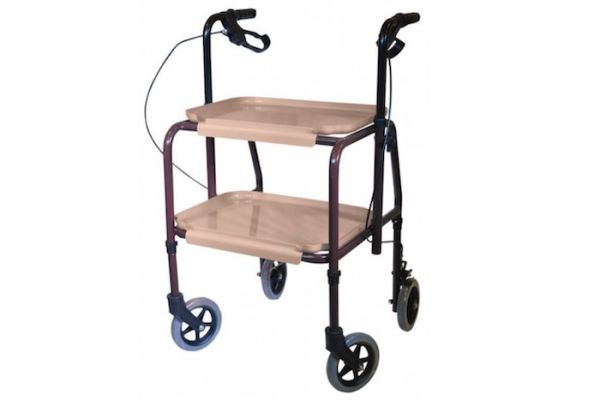
- Assists users to carry essentials, plates and cups from room to room
- Some models offer height adjustment and braking systems
- Includes one or two trays
- Non‑folding design for use at the home
- Narrow frame and smaller wheels than rollators
- Promotes independence by enabling users to transport items, ideal for those with limited mobility in their hands due to arthritis
- Does not provide as much support as rollators
- Not designed to support the users weight
Walking Sticks
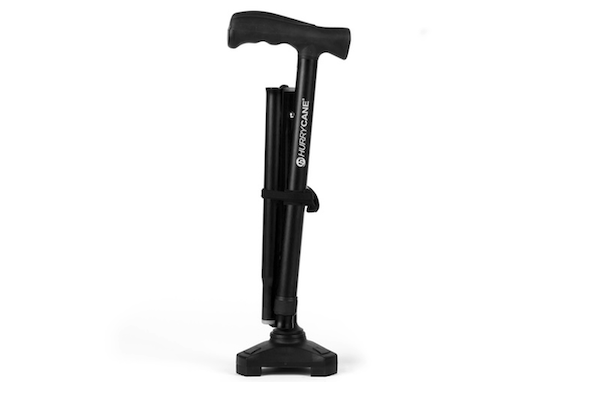
- Designed for those with mild weakness and instability and those recovering from injuries
- For those who require minor assistance or for use when walking short distances
- Available in various designs including collapsible, lightweight, and all‑terrain models
- Lightweight and adjustable solutions for easy handling and storage
- Many use a walking stick for short distances and a rollator for longer journeys
- Provides less support than a rollator or frame
- Not suitable for those with poor balance
Wheeled Mobility Aids - Wheelchairs, Powerchairs & Mobility Scooters
For those who need additional support, both wheelchairs and powerchairs are available. Transit wheelchairs are designed to be pushed by a caregiver, while self‑propelled wheelchairs allow users to move independently. Wheelchairs are typically used by individuals who have difficulty walking or are unable to stand, such as those with spinal cord injuries, cerebral palsy, multiple sclerosis, or chronic fatigue.
Powerchairs are often chosen by people who want to travel longer distances but struggle with standing or walking, for example due to severe arthritis or COPD.
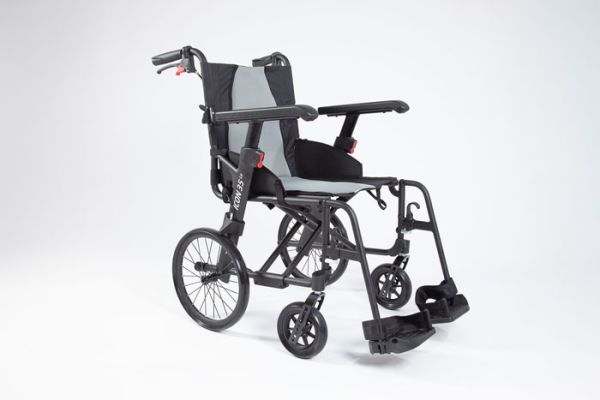
- Designed for an attendant to push the chair, often used by those with limited upper body strength
- Smaller rear wheels than the self-propelled chair making it lighter and easier to manoeuvre and store
- Suitable for indoor or outdoor use
- Various seat widths and designs to ensure it is comfortable for the user
- Controlled through push handles and an attendant brake system
- Cannot be self-propelled, not suitable for those who wish to move independently
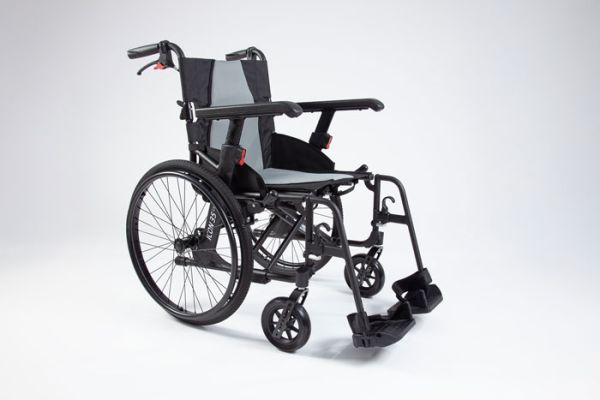
- Designed for the wheelchair user to propel themselves, often the chairs are still equipped with handles to allow the user to be pushed when needed
- Used by those who have the upper-body strength to control the chair
- Larger wheels than the self-propelled wheelchairs
- Suitable for indoor or outdoor use
- Various seat widths available to meet the users needs
- Generally includes armrests and adjustable footrests
- Designed for increased independence and control
- Generally heavier than the transit solutions
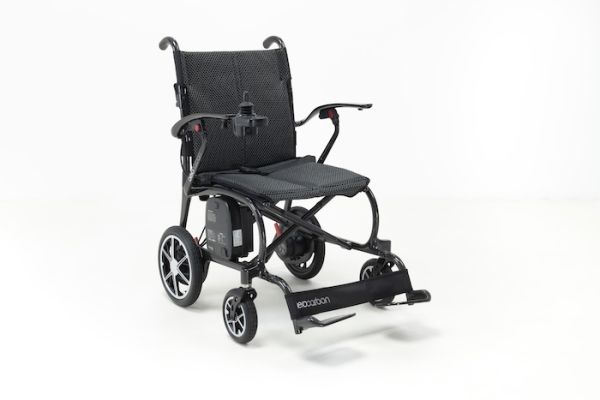
- Users can control the chair themselves using the gearstick. Used by those who cannot use a self-propelled chair or do not have upper-body strength
- Suitable for indoor or outdoor use
- Lightweight and folding models available
- Offered in various designs — distance range, battery life, and speed differ by model
- Designed for increased independence and control
- Regular charging required — battery range varies by model
- More expensive than manual solutions
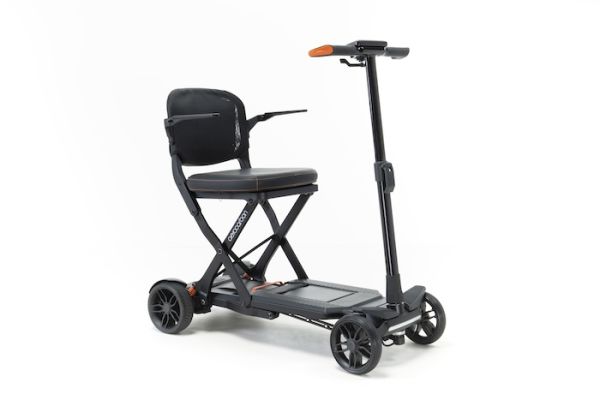
- Designed for those who struggle to walk long distances
- Many use a rollator or walking stick indoors but need powered assistance outdoors
- Available in lightweight and folding models for travel and easier storage
- Various designs — distance range, battery life, speed, and comfort vary by model
- Check the scooter class, some scooters are designed for pavements, others can be used on the road
- Designed for increased independence and control
- Not suitable for indoor use due to the turning radius
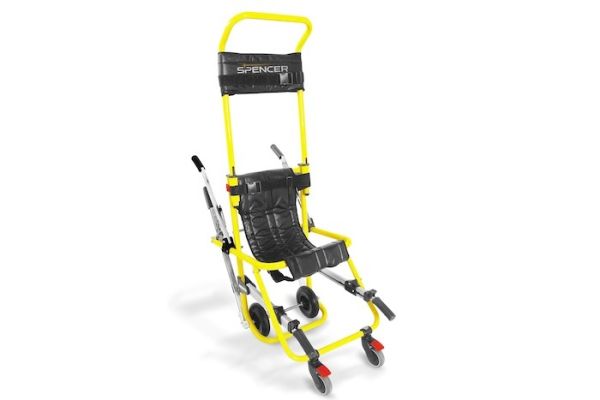
- Designed to assist individuals with disabilities, injuries, or limited mobility who cannot safely use stairs during an emergency
- Designed to help evacuate people safely up or down staircases in an emergency
- Lightweight and folding options available for compact storage near staircases
- Requires one or two people to operate
- Only for use in emergencies, not designed for use as a daily mobilty aid
- Requires training for safe operation
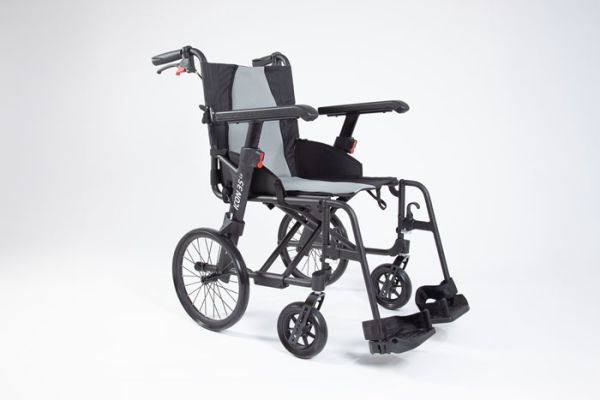
Transit Wheelchairs
- Designed for an attendant to push the chair, often for those with limited upper body strength
- Smaller rear wheels than the self-propelled chair making it lighter and easier to manoeuvre
- Suitable for indoor or outdoor use
- Various seat widths and designs to ensure it is comfortable for the user
- Controlled through push handles and an attendant brake system
- Cannot be self-propelled, not suitable for those who wish to move independently
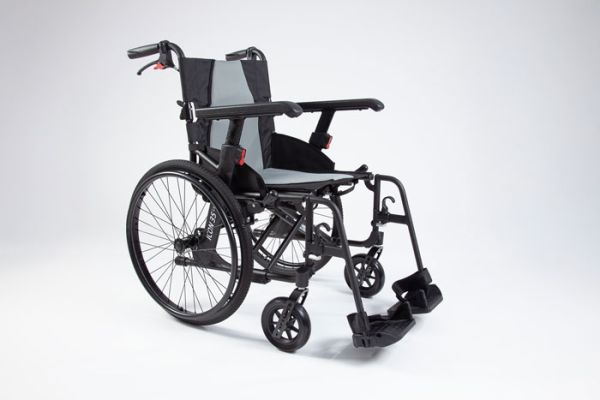
Self-Propelled Wheelchairs
- Designed for the wheelchair user to propel themselves, often the chairs are still equipped with handles to allow the user to be pushed when needed
- Used by those who have the upper-body strength to control the chair
- Larger wheels than self-propelled chairs
- Suitable for indoor or outdoor use
- Various seat widths to meet the users needs
- Generally heavier than the transit solutions
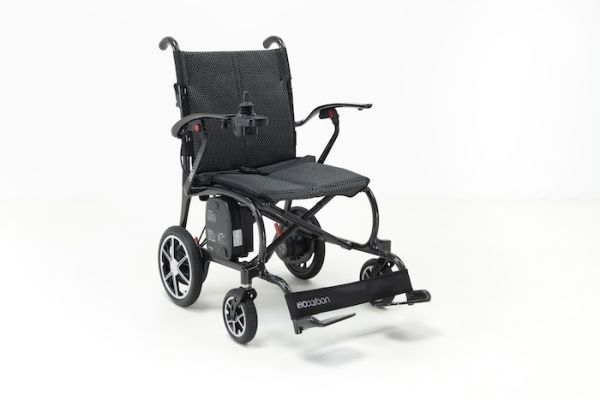
Powerchairs
- Users control the chair using the gearstick. Used by those who cannot use a self-propelled chair or do not have upper-body strength
- Suitable for indoor or outdoor use
- Lightweight and folding models available
- Various designs — distance range, battery life, and speed differ by model
- Increases independence
- Charging required — battery ranges vary
- More expensive than manual solutions
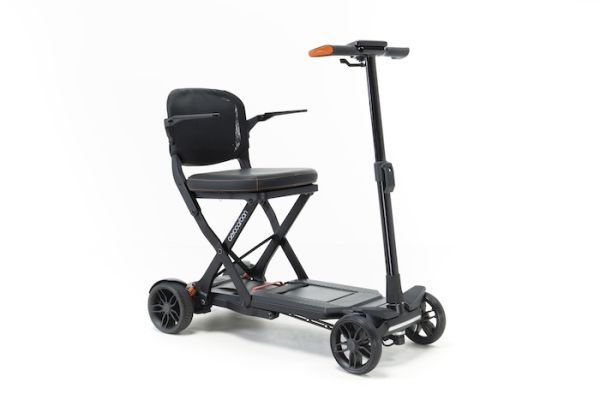
Mobility Scooters
- Designed for those who struggle to walk long distances, increases independence
- Many use a rollator or walking stick indoors but need powered assistance outdoors
- Available in lightweight and folding models for travel and easier storage
- Various designs — distance range, battery life, speed, and comfort vary by model
- Check the scooter class, some are designed for pavements, others can be used on the road
- Not suitable for indoor use due to turning radius
Evacuation Chairs
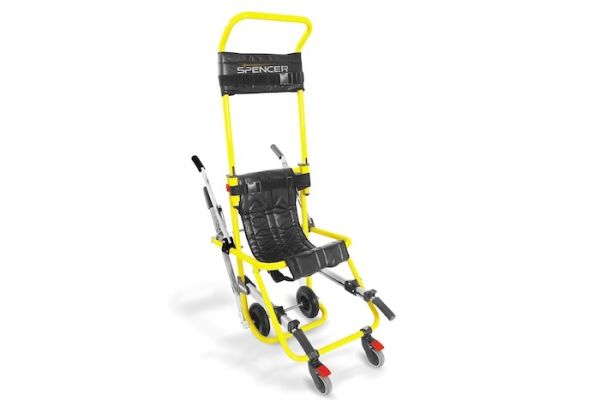
- Designed to assist individuals with disabilities, injuries, or limited mobility who cannot safely use stairs during an emergency
- Designed to help evacuate people safely up or down staircases in an emergency
- Lightweight and folding options available for compact storage near staircases
- Requires one or two people to operate
- Only for use in emergencies, not designed for use as a daily mobilty aid
- Requires training for safe operation
Daily Living Aids - Ramps, Half Steps and Perching Stools
Daily Living Aids are designed to support users with everyday activities around the home. They are designed to improve accessibility, safety, comfort and enhance independence.
A wide selection of daily living aids are available on the market which can be used in various rooms around the home from the kitchen to the bedroom. These include mobility supports such as ramps, half steps, and grab rails to help users access the home, as well as personal independence aids like overbed tables, perching stools, personal alarms, and dressing aids.
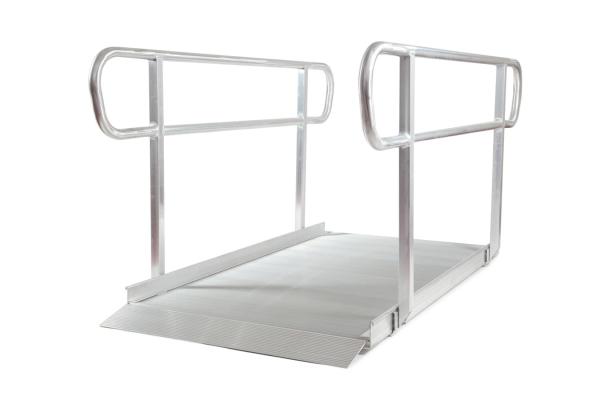
Access Ramps
- Provides a smooth slope to overcome heights
- Used by those using mobility aids including wheelchairs, mobility scooters and rollators
- Enhances accessibility
- Provide access to the home or garden
- Temporary, folding and fixed options
- Wide selection available including rubber ramps, bridge ramps and adjustable designs
- For lower heights and areas where space is limited some prefer half steps
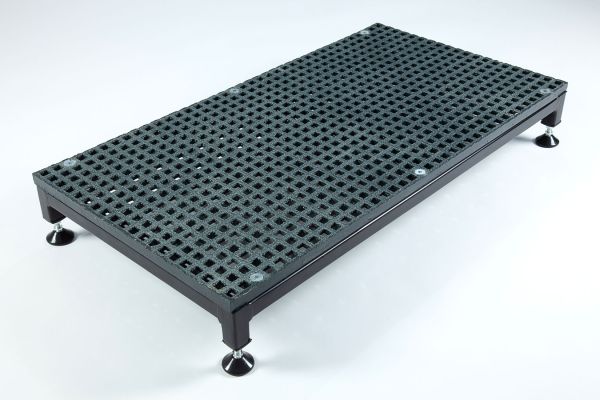
Half Steps
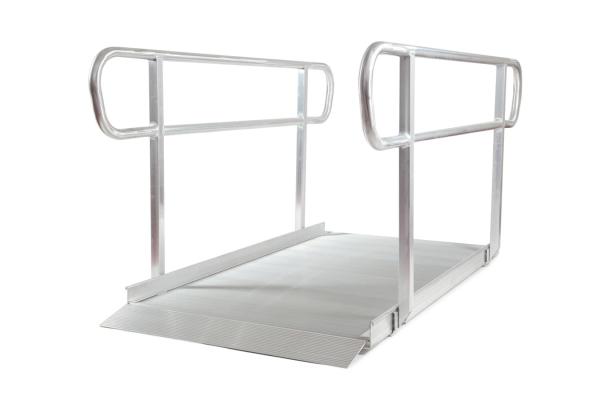
- Designed for individuals who struggle to lift their legs over higher steps due to limited mobility, arthritis, balance issues, or weakness. Also used in areas where the step is higher than usual which provides a trip hazard.
- Reduces the distance from the ground to the step, making it easier to overcome heights
- Handrails available for additional security
- Various sizes to accommodate walking aids
- Not suitable for wheelchairs and scooters
- Not for areas with multiple steps
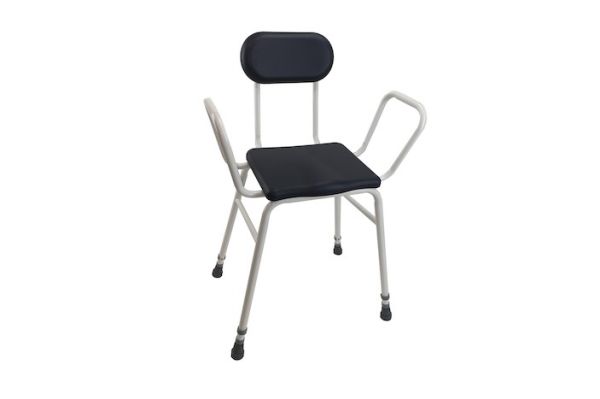
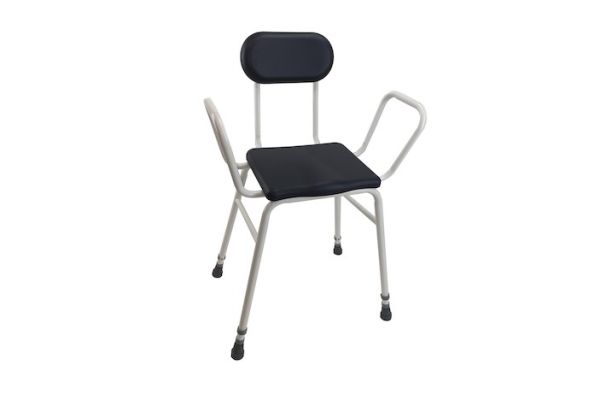
Perching Stools
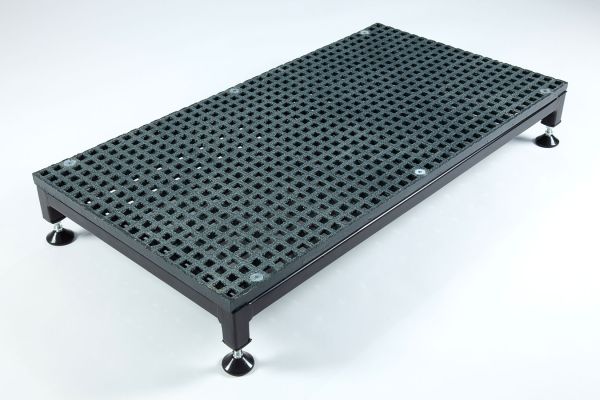
- Designed for those who struggle to sit down fully or stand up from a seated position
- Allows users to “perch” rather than sit fully, reducing strain on legs, hips, and the lower back
- Models available with backrests and armrests for additional comfort and stability
- Adjustable designs to allow users to find a comfortable position
- Not suitable for users with poor balance or limited upper‑body control when seated
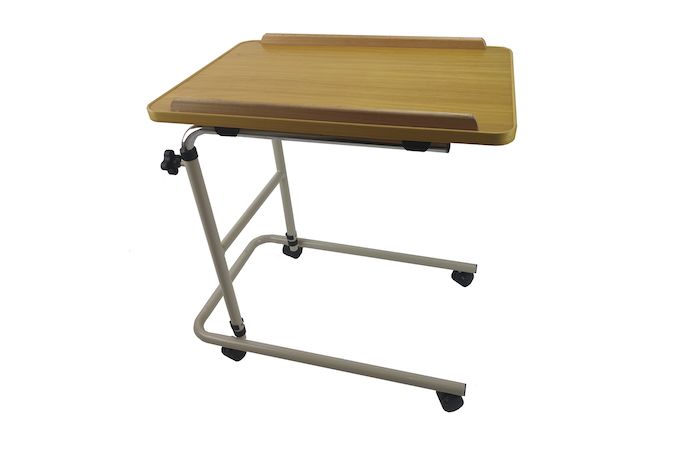
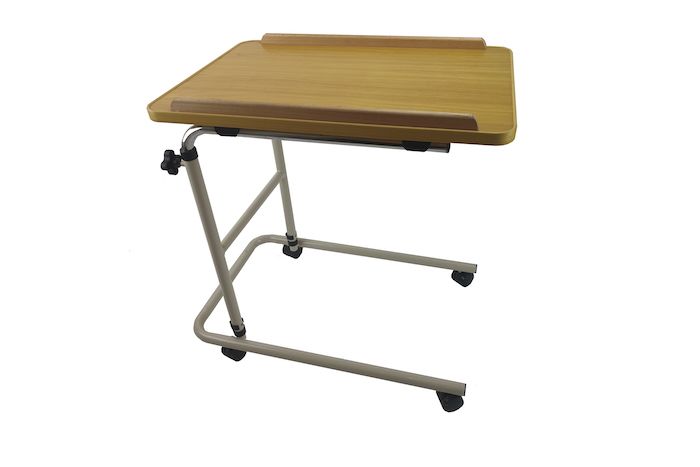
Overbed Tables
- Designed for those who are bedbound or have limited mobility so often have meals or undertake tasks in bed
- Used in homes, care homes and hospitals
- Allows users to eat, work or read in bed and keep accessories close by
- Stable surface improves safety, especially when handling hot food or drinks
- Adjustable in height, suitable for various beds
- Not for users who need weight‑bearing support
- Provides a smooth slope to overcome heights
- Used by those using mobility aids including wheelchairs, mobility scooters and rollators
- Enhances accessibility and reduces the risk of falls
- Often used to provide access to the home or garden
- Temporary, folding and fixed options to meet users needs
- Wide selection available including rubber ramps, bridge ramps and adjustable designs
- For lower heights and areas where space is limited some prefer half steps
- Designed for individuals who struggle to lift their legs over higher steps due to limited mobility, arthritis, balance issues, or weakness. Also used in areas where the step is higher than usual which provides a trip hazard.
- Reduces the distance from the ground to the step or doorway, making it easier for users to overcome the height
- Indoor and outdoor solutions available
- Handrails available for additional support and security
- Various sizes to accommodate walking aids
- Not suitable for wheelchairs and mobility scooters
- Generally not suitable for areas with multiple steps
- Designed for those who struggle to sit down fully or stand up from a seated position
- Allows users to “perch” rather than sit fully, reducing strain on legs, hips, and the lower back
- Models available with backrests and armrests for additional comfort and stability
- Adjustable designs to allow users to find a comfortable position
- Not suitable for users with poor balance or limited upper‑body control when seated
- Designed for those who are bedbound or have limited mobility so often have meals or undertake tasks in bed
- Commonly used in homes, carehomes and hospitals
- Allows users to eat, work or read in bed and keep accessories close by
- Stable surface improves safety, especially when handling hot food or drinks
- Adjustable in height, suitable for various beds
- Not suitable for users who need weight‑bearing support
We understand choosing the right access solution can sometimes be challenging. For more help choosing the right wheelchair ramp, including tips on what to measure, view our Wheelchair Ramp Buying Guide. For support choosing right half step, visit our Half Steps Buying Guide.
Bathroom Aids & Toilet Aids - Toilet Frames, Shower Stools and Commode Chairs
Bathroom aids and toilet aids are designed to help users maintain independence when showering, bathing, and using the toilet. These mobility aids enhance safety in areas where slips and falls are more likely due to wet and slippery surfaces. Adding bathroom and toilet aids to the home can significantly boost user confidence, enabling individuals to carry out daily hygiene routines more safely and comfortably. By supporting proper hygiene, these products can also help reduce the risk of infections—such as urinary tract infections (UTIs), sepsis, and norovirus—which can become serious or even life‑threatening if not managed effectively.
- Designed for those with limited mobility, spinal cord injuries, long‑term health conditions, or age‑related mobility challenges to use in the shower or wet room at home, in a care home or hospital setting
- Attendant‑propelled and self‑propelled solutions
- Adjustable seat height to suit the user’s needs
- Easy‑clean materials and design to maintain hygiene
- Requires sufficient space in the shower or wet room for safe use
- Assist users who require support to stand up or sit down safely
- Commonly used in the home, hospital and care homes by the elderly and those recovering from surgery and those who struggle with joint pain or arthritis
- Provides stability and reduces the strain placed on knees, hips, and the lower back
- Fully adjustable to fit most toilets
- Lightweight design for easy repositioning and cleaning
- Not suitable for those with very poor balance. Provides less support than fixed grab rails
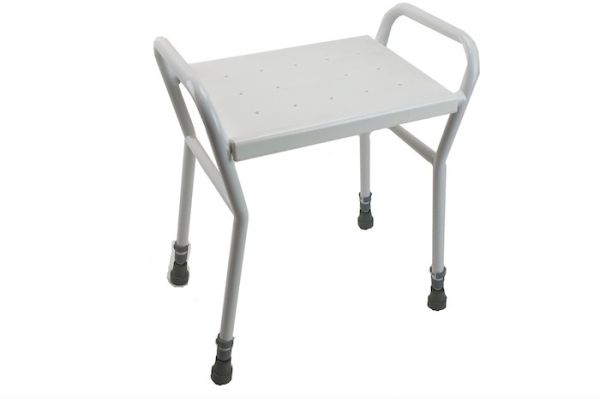
- Provides a safe place for users to sit whilst showering
- Commonly used by the elderly and those with limited mobility who struggle to stand for periods of time
- Reduces strain places on knees, hips and lower back when standing up
- Enhances safety by reducing the risk of fatigue, falls and slips whilst showering
- Adjustable in height to fit the users needs
- Not suitable for use in the bath
- Designed to make it easier for users to step in and out of the bath
- Commonly used by the elderly and those with limited mobility who struggle to access the bath
- Height‑adjustable to suit different baths
- Non‑slip surface for enhanced safety in wet environments
- Reduces the risk of slips and falls when stepping into or out of the bath
- Not suitable for wheelchair users. Grab rails are recommend in conjunction with the step
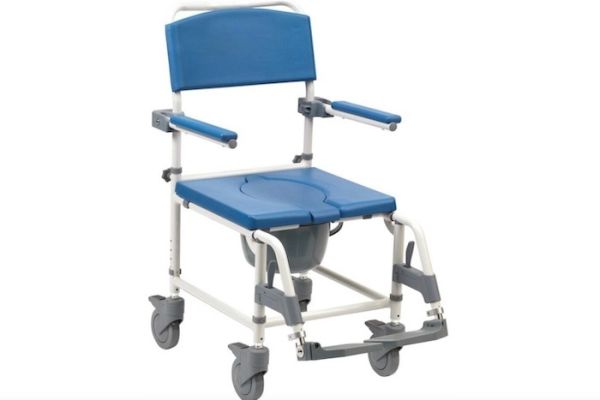
Shower Commode Chair
- Designed for those with limited mobility, spinal cord injuries, long‑term health conditions, or age‑related mobility challenges to use in the shower or wet room at home, in a care home or hospital setting
- Attendant‑propelled and self‑propelled solutions
- Adjustable seat height to suit the user’s needs
- Easy‑clean materials and design to maintain hygiene
- Requires sufficient space in the shower or wet room for safe use
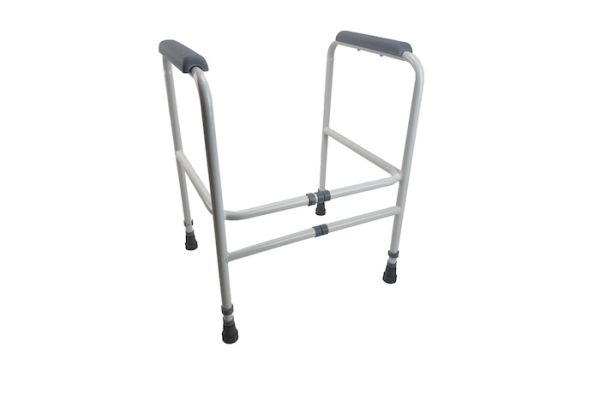
Toilet Frame
- Assist users who require support to stand up or sit down safely
- Commonly used in the home, hospital and care homes by the elderly and those recovering from surgery and those who struggle with joint pain or arthritis
- Provides stability and reduces the strain placed on knees, hips, and the lower back
- Fully adjustable to fit most toilets
- Lightweight design for easy repositioning and cleaning
- Not suitable for those with very poor balance. Provides less support than fixed grab rails
Shower Stools
- Provides a safe place for users to sit whilst showering
- Commonly used by the elderly and those with limited mobility who struggle to stand for periods of time
- Reduces strain places on knees, hips and lower back when standing up
- Enhances safety by reducing the risk of fatigue, falls and slips whilst showering
- Adjustable in height to fit the users needs
- Not suitable for use in the bath
Overbed Tables
- Designed to make it easier for users to step in and out of the bath
- Commonly used by the elderly and those with limited mobility who struggle to access the bath
- Height‑adjustable to suit different baths
- Non‑slip surface for enhanced safety in wet environments
- Reduces the risk of slips and falls when stepping into or out of the bath
- Not suitable for wheelchair users. Grab rails are recommend in conjunction with the step
Financial Assistance in the UK for Mobility Aids
- In the UK, there is a range of financial support and schemes available for those who require mobility aids.
- Personal Independence Payment (PIP) – Those with limited mobility can apply for PIP through the UK government website. The Department for Work and Pensions (DWP) will assess your daily living and mobility needs to identify what support you qualify for. PIP has replaced the Disability Living Allowance (DLA) for most individuals.
- Home Adaptations – For those needing help within the home, the local council offers a service to complete a home assessment and recommend changes. The council will generally pay for adaptations costing under £1,000, for example if you require grab rails or a ramp. To apply for a home assessment, visit the government website.
- Disabled Facilities Grants – If you need to adapt your home due to a disability, you can apply for funding. The Disabled Facilities Grant is aimed at more expensive changes required around your home, for example installing a wet room, lift or building an extension. The maximum grant available in the UK is £30,000 (2025/26). In Wales, the maximum grant is £36,000.
- Borrow Mobility Aids from the NHS – The NHS has a selection of mobility aids available for users to borrow, including walking sticks and crutches. The NHS also provides wheelchairs to users who qualify following an assessment. We suggest speaking to your GP, physiotherapist or occupational therapist to see what products they can provide.
- Funding Towards a Wheelchair – The NHS has a personal wheelchair budget to support users in purchasing their chosen wheelchair.
- Affordable Wheelchair Hire – The Red Cross hires wheelchairs at an affordable price, starting at around £22 per week. To learn more visit the Red Cross website.
- Motability Scheme – If you receive mobility allowance due to a disability, the Motability Scheme may be able to provide support if you wish to hire or buy an electric wheelchair. To apply, you need to receive the higher mobility component of PIP or the higher rate of DLA. Full qualification details can be found on the Motability Scheme website
- Access to Work Scheme – If you are looking to start work or are already in work, the Accesss to Work scheme can provide financial support to help you purchase equipment required to complete your role, and can contribute towards physical changes needed in the workplace.
- Charities – Various charities can help you pay for mobility aids. You can research charity grants focused on your specific disability and contact them for support.
- VAT Relief - Many mobility aids are available VAT‑exempt for those in the UK with a disability. You also do not need to pay VAT on building work completed due to your disability. Registered UK charities can also purchase items VAT‑exempt.
Try Mobility Aids
- If you wish to find out more about independent living aids and try equipment, there are Independent Living Centres (also referred to as Assisted Living Centres and Disabled Living Centres)in the UK. Some centres also provide short‑term hire of certain items.
- There are also Centres for Independent Living. These are run by disabled people and may or may not have equipment available to view.
- You can also speak to the NHS, for example your GP or hospital staff, about borrowing mobility aids.
- It is important to find the right mobility aid based on your disability, abilities, height and weight. We always recommend checking the product features and size before purchase to ensure it is suitable for your needs. Within our product pages, we provide advice on how to choose the right walking stick or rollator based on your height. The NHS also offers support; we recommend speaking to your GP, physiotherapist or occupational therapist if you need help selecting the right mobility aid or setting the correct height for your rollator or walking stick. Where home visits are provided, an occupational therapist may set up your walking stick, perching stool or similar equipment for you.
- At The Ramp People, we are an online business, so unfortunately we do not have a showroom to allow you to try items. However, we do offer a 60‑day returns period, so if the item is not suitable, you can simply return it to us.
Everyday Accessibility Schemes
- Blue Badge - For those with limited mobility, you may wish to apply for a Blue Badge. This allows you to park in disabled parking bays, making trips to the shops or outings easier as you do not need to walk as far from the car.
- Radar Key - We also recommend purchasing a Radar Key, which allows you to access locked disabled toilets with ease. These are generally priced at around £5.00.
- Free Bus Pass - In many instances, those with disabilities or elderly individuals may lose their licence temporarily or permanently—for example due to epileptic seizures, a stroke, heart conditions or limited vision. In the UK, those who are unable to drive due to a disability can apply for a for a free bus pass.
Request a callback
Still need assistance? Our team is available throughout the week to help via phone, email, live chat or WhatsApp. If you’d rather we call you, you can easily request a callback here.