



Step Stools: Safety Guide
This guide will take you through everything you need to know before purchasing a step stool for your workplace, warehouse, or industrial unit.
We will cover the key health and safety regulations, whether it is safe to use a step stool in your workplace, and the types of step stools available.
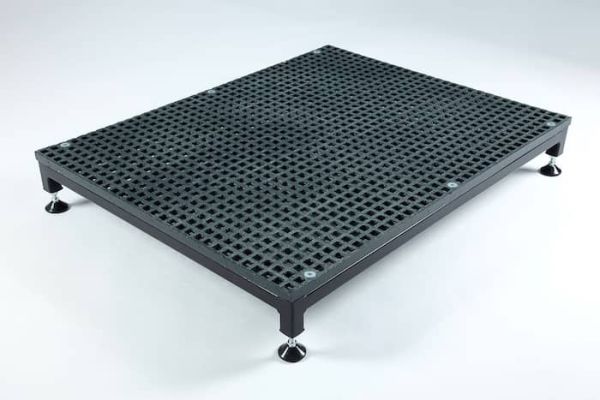
Introduction to our Guide
Step stools can include one or more steps. They are used in workplaces to help employees safely overcome lower heights and access areas that are just out of reach. Common uses include accessing shelves or completing small maintenance tasks, such as changing a lightbulb or replacing fixtures. Step stools are generally intended for short tasks; employees should not stand on them for extended periods.
To be classified as a step stool, the maximum height of the stool or ladder should be under 1 metre. In general, step stools have larger treads than ladders. They are available in a variety of designs and may have fixed or folding legs. Some models feature fold-out or pull-out steps. Step stools can also include platforms or be dome-shaped. Step stools can be manufactured from a range of materials with aluminium, plastic and wooden solutions available.
Regulations & Helpful Links
The Work at Height Regulations 2005 (WAHR) set out requirements to protect employees working at height. The guidance details the safety measures and procedures that must be in place to allow workers to work at height safely, along with requirements for working platforms.
BS EN 14183 is the standard covering step stools. It applies to various types, including folding, pull-out, and dome-type step stools. The standard specifies requirements for slip resistance, material type, and testing.
The Health and Safety at Work Act 1974 requires employers to provide a safe working environment and ensure equipment is safe to use. The Act requires risk assessments to be completed and for risks to be mitigated.
The Health and Safety Executive (HSE) provides a guide to working at height, including a step-by-step process to help you decide whether a step stool should be used.
What Are the Different Types of Step Stools
Adjustable Step Stool
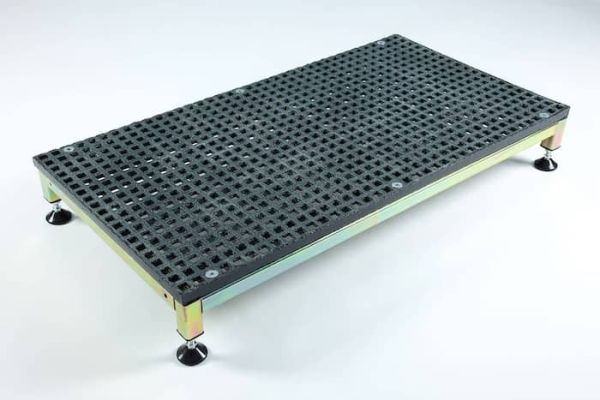
Height adjustable between 80mm – 185mm, these safety stools are suitable for indoor or outdoor use. They feature a PGR slip-resistant, self-draining surface for added safety.
Step Stool Platform
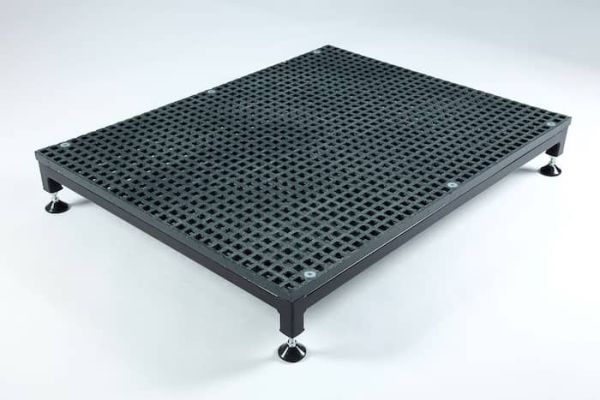
Adjustable between 80mm – 185mm, these platforms measure 1m x 1m, providing a stable working area for maintenance tasks. Highly durable, they offer an impressive 800kg capacity.
Adjustable Steps
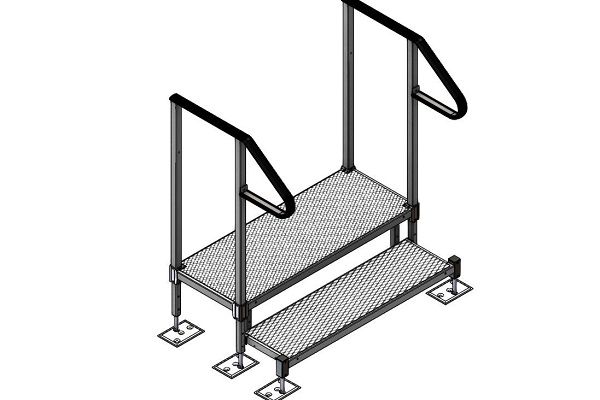
Available with up to 3 steps and adjustable in height, these steps can be purchased with or without handrails. They include fixing points for secure attachment to a building.
Metal Step Stool
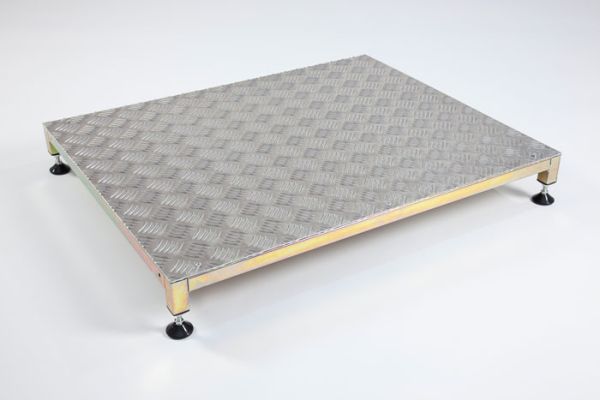
Available in two sizes, the metal step stool adjusts between 80mm – 120mm and supports up to 120kg. Ideal for tasks requiring a sturdy, compact solution.
What are the British Standards for Step Stools?
In the UK, step stools are covered by BS EN 14183:2003. This standard outlines the key requirements for step stools and the types available. Previous standards for step stools, which have now been withdrawn, include BS 7377:1994 and BS 7377:1991.
How Do You Use a Step Stool Safely?
Step stools should only be used for short-duration tasks and on flat, stable surfaces.
A risk assessment must be completed before use to ensure the stool is appropriate and the user is competent.
Set the stool to a suitable height to avoid over-reaching. Wear relevant PPE, such as steel capped boots.
Always follow the manufacturer’s guidelines and do not exceed the recommended capacity.
What Inspections Do Step Stools Require?
In the workplace, step stools are covered by the Provision and Use of Equipment Regulations 1998 (PUWER). In line with the regulations the steps should be suitable for use and maintained in safe working order. They should also be regularly inspected for signs of damage.
Pre-use checks should be completed before each use to ensure the stool is safe. Inspections should include checking the step for signs of damage and ensuring the step is free from liquid and dirt to reduce the risk of slips.
It is recommended that step stools are inspected daily and before each use. Records should be kept of these checks.
Key checks include ensuring the step stool is not cracked or worn and that the feet are not damaged.
Step stools should not be used if they are damaged.
When Should a Step Stool Be Used?
Step stools provide temporary access to areas just out of reach. For regular access, a permanent fixed step is recommended. Users should be able to work without over-reaching. For higher heights, consider using a step ladder instead.
Do Step Stools Require Handrails
For step stools with three steps or fewer, handrails are not legally required. However, it is essential to carry out a risk assessment to determine whether handrails are necessary for your specific environment.
In some workplaces, due to higher risk factors, handrails may be recommended to allow users to maintain three points of contact while using the steps.
Step Stools vs Ladders
Step Stools are designed for overcoming lower heights and short-duration tasks.
For higher heights, step ladders are recommended. Step ladders used in workplaces typically include handrails and a platform for additional support and safety.
Step Ladders
For higher heights we offer a range of step ladders including Mobile Step Ladders with Platforms which are ideal for safe and stable access. We also offer Narrow Ladders, perfect for confined spaces and narrow warehouse isles. Many of our ladders solutions are Kitemarked to BN131-7, the British Standard for ladders, ensuring compliance and safety.
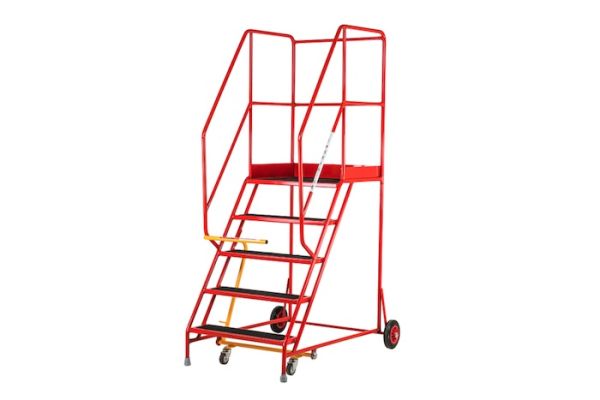
For overcoming higher heights, ladders are available including ladders with platforms for those working at height.
What Are the Different Types of Ladders
Platform Step Ladders

Available in a choice of four heights, this ladder is provided on wheels and includes handrails and guardrails to allow users to safely undertake work at height.
Narrow Ladders
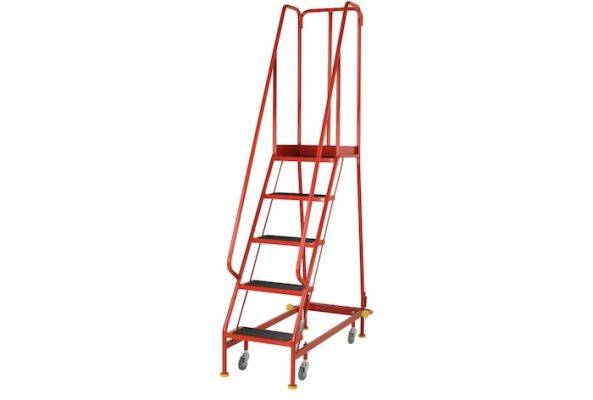
Ideal for picking items in narrow areas, the 500mm-wide ladder is supplied with wheels and includes retractable spring-loaded castors and slide-out stabilisers for optimum safety.
Steel Mobile Steps
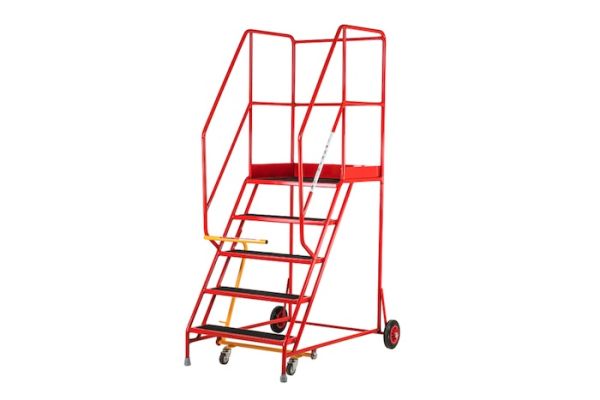
Available with an anti-slip or punched metal surface, the BN131-7 industrial ladder is designed to support working heights up to 3.3m. Includes handrails, guardrails, and toeplates.
Trade Step Ladder
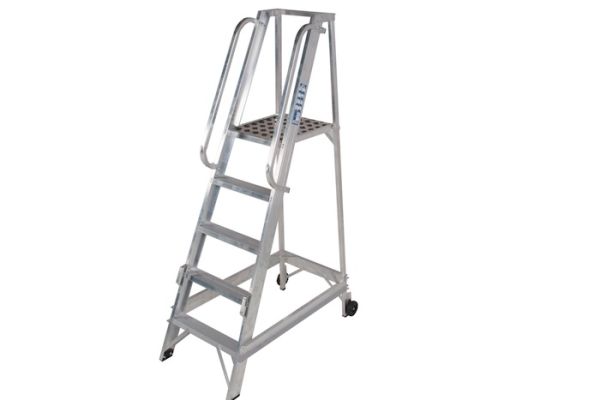
Available in five heights, the Trade Step Ladder is lightweight and fitted with wheels, allowing it to be tilted and manoeuvred with ease. Double handrails provide additional support.
Still Require Assistance? Request a callback
Our team is available throughout the week to help via phone, email, live chat or WhatsApp. If you’d rather we call you, you can easily request a callback here.