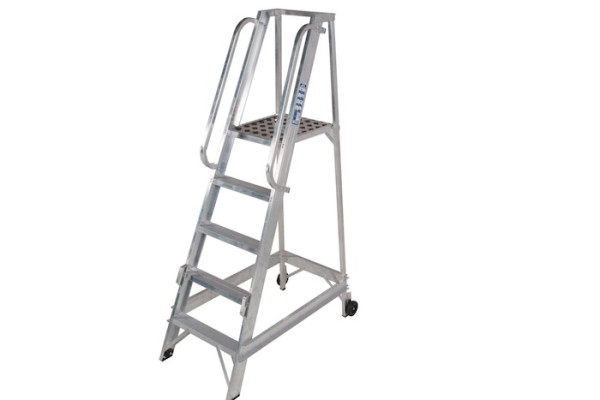
What is the Safe Working Load (SWL) of The Ramp People's mobile platforms with steps?
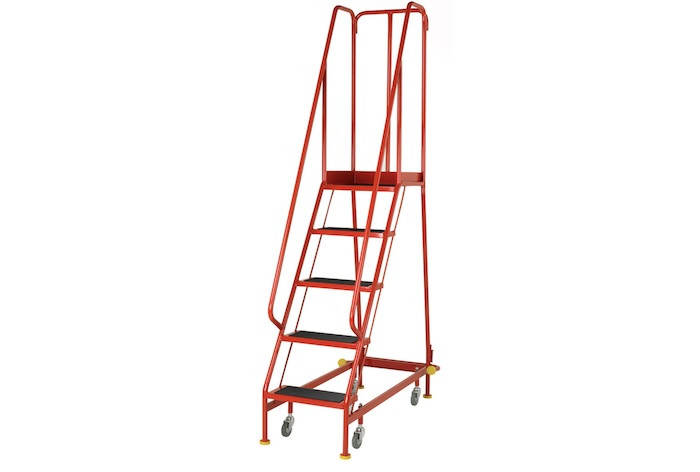
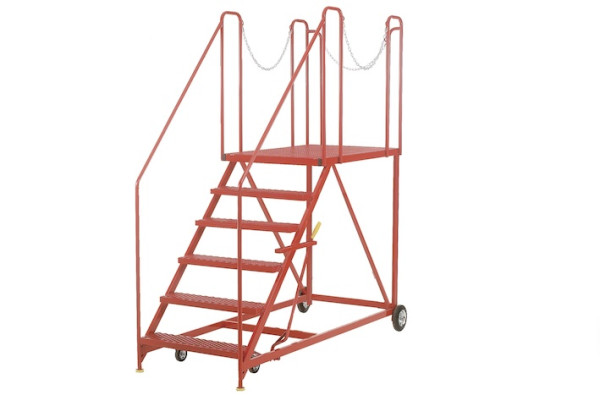
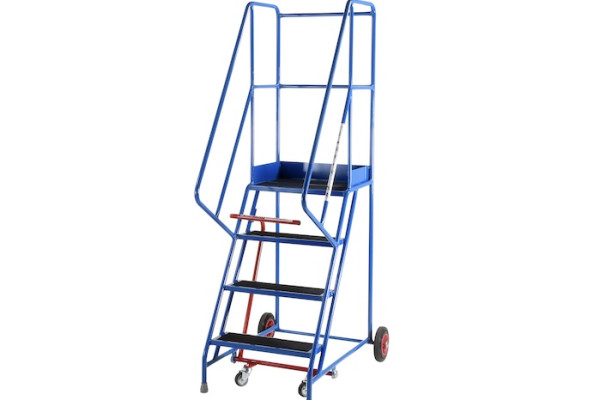
The maximum SWL is 150kg, in line with BS EN 131-7:2013, the current standard for mobile ladders with platforms. Please view the specification of the individual product for the SWL for each
What is the highest Mobile Step The Ramp People offer?
The highest platform height is 3750mm, this is designed for working heights up to 5500mm.
Are The Ramp People's safety ladders provided assembled?
Our range of mobile steps are available to purchase assembled or unassembled; please see the individual listing for details. Please note, when purchasing 10 treads or above they are provided in two sections which need to be assembled together. Our Platform Step Ladders with Handrails are only provided unassembled.
How is the approximate working height calculated for the safety steps with platforms?
The working height is based on the height of the platform plus 1.75m (5'8") to account for the height of the individual standing on the platform. It is an approximation as of course, the user height will vary.
What material are the mobile steps manufactured from?
All of our steps are manufactured from steel and offered with anti-slip surfaces to reduce the risk of slips. We have a selection of mobile ladders with PVC, rubber and punched metal treads.
Are step ladders with platforms legally required in the UK workplace?
In the UK The Work at Height Regulations 2005 are in place to ensure employees can safely work at heights. There are various ways employers can ensure employees can work safely at heights including utilising mobile steps, elevated work platforms, scissor lifts, scaffold towers and more. It is also recommended PPE is worn whilst working at height including harnesses, lanyards, helmets, safety boots and safety gloves.
Employers are responsible for ensuring any work completed at height is planned, supervised and completed in a safe manner. It is important to consider the risks such as the environment and the distance an employee could potentially fall. A risk assessment should be completed for steps, ladders and platforms. If employers do not take steps to ensure employees can work safely at height, they can be held liable for any incidents which occur, including injury.
The Health and Safety at Work Act 1974 and the Management of Health and Safety at Work Regulations 1999 also requires employers to ensure health and safety and protect employees from risk.
How often should ladders, steps and platforms be inspected?
The Provision and Use of Work Equipment Regulations 1998 (PUWER) explains how to make sure work equipment, including ladders, are safe to use.
All ladders and steps should be checked daily and prior to use for any defects. It is recommended to especially check the feet, treads, rungs and locking mechanism of the ladder. Any defects should be reported. Ladders and steps should not be used if they are not in fit condition. It is recommended you keep records of checks completed in case any incidents occur or for audits, for example, health and safety audits or ISO 45001 H&S audits.
How do you safely use step ladders with platforms?
- The mobile step ladders should be inspected prior to use for any damage or defects
- The step ladders with platforms are designed to be used on flat, clean ground to prevent it slipping (there should not be liquids, oils or similar on the floor under the steps)
- Users should be able to stand on the platform to undertake work; they should not have to reach to complete work
- The locking device should be engaged where relevant
- The mobile steps should be moved into position using the wheels on the base of the steps, do not lift them into position due to the weight
- Avoid side loading where possible
- Keep both feet on the platform whilst undertaking works to allow the body to be supported by the step ladder
- Those using ladders and steps should be trained to do so
- Do not use ladders need electrical hazards such as overhead lines or exposed electrical equipment
- Only one person should use the platform step ladder at one time
What checks should be taken on platform ladders prior to use?;
Daily, and prior to use, it is recommended users check:
- The legs of the ladder are not twisted, dented or damaged
- The fixings are tight and that no fixings are missing
- Check the rungs/steps of the ladder for signs of damage or wear
- Check the ladder is free from dirt, grease or liquids
- Ensure, where relevant, the locking mechanism secures correctly
- Check that platform is secure and not damaged
Please consult your specific ladders user manual for the full checks required. Companies should have their own ladder checklist in place to confirm when checks are undertaken. Relevant employees should complete training to ensure sufficient checks are completed.
Do companies need to carry out a risk assessment before using ladders at work?
Yes, employers should undertake a risk assessment prior to using a ladder in the workplace. Employers are required to check whether a ladder is the most suitable solution for the scenario. This is covered in Schedule 6 of the Work at Height Regulations and referenced in schedule 3 of The Management of Health and Safety at Work Regulations 1999.
During a risk assessment to check whether a ladder is a suitable solution you should consider how long an employee will be using the ladder for. You should also consider if it is safe to use a ladder for the work, for example will the ladder be sat on a flat and dry area? It is of course important to consider the surrounding areas. If the ladder is being used in a warehouse it is important it is not at risk of being hit by a forklift or blocking a fire exit.
Are handrails required on all mobile steps, ladders and platforms in the workplace?
The Work at Height Regulations recommend for working platforms to have handrails or guard rails, to protect workers from the risk of falls. As employers are responsible for ensuring health and safety is managed, where possible it is recommended to have steps and ladders with handrails as an additional safety measure.
Do employees require training to work on ladders?
Yes, training is required for employees who will be working at height, including using ladders, mobile steps and platforms in the workplace.
How can you safely use a ladder?
The UK Health and Safety Executive (HSE) recommend maintaining three points of contact with the ladder at all times. For example, your feet should remain on the ladder and at least one hand should be holding the ladder or the ladder handrail where available. It is also recommended you position the ladder to face the work activity rather than side on. For more information you can view the Safe Use of Ladders and Stepladders guide by the Ladder Association and HSE.
What is the British Standard for steps?
In the UK the current standard for mobile ladders with platforms is BS EN 131-7:2013. The European standard provides details of the requirements for mobile ladders with platforms including design features, requirements and test methods. The standard recommends a maximum platform height of 5m and a maximum safe working load (SWL) of 150kg. This SWL includes the weight of the user and any tools and equipment.Steel Mobile Steps are Kitemarked to this standard.
Previous standards which are no longer in use are BS2037, which focuses on aluminium steps and ladders and BS1129 which focuses on timber ladders and steps.
Can mobile steps be used on uneven ground?
No, we do not recommend using the mobile steps on uneven ground. The steps are designed with 4 wheels which should sit securely on the ground for optimal security.
What is the benefit of having a ladder with four feet?
The mobile ladders with platforms are provided with four feet to ensure the ladder remains securely on the ground during use. Other ladders with only two feet rely on a further individual being required to hold the ladder securely in place during use.
Are ladders covered by LOLER?
No, ladders are generally covered by PUWER rather than LOLER.
To learn more view our Warehouse Ladders Safety Guide.