



Warehouse Ladders: Safety Guide
This guide will take you through everything you need to know before purchasing a ladder for your workplace, warehouse, or business park.
We will walk you through the key health and safety regulations in place, whether it is safe to use a ladder in your workplace, and what maintenance and training are required to ensure ladders are used safely.
Introduction to our Guide
Ladders are regularly used in homes and workplaces across the UK to allow workers to safely access locations above ground. They are routinely used in warehouses to undertake picking tasks, and by those carrying out maintenance work on site.
Ladders are permitted in workplaces; however, it is essential that regulations are adhered to, and relevant risk assessments are completed prior to their use to ensure employees remain safe whilst working at height. This guide focuses on the use of ladders within the workplace.
Regulations & Helpful Links
The Work at Height Regulations 2005 (WAHR) set out the requirements for employers to protect employees using ladders in the workplace. The guidance details the safety measures and procedures that must be in place to allow workers to work at height safely.
The Health and Safety Executive (HSE) website outlines how to safely use a ladder in the workplace, how to check a ladder is safe, and how to inspect a ladder.
The Ladder Association, recommended by the HSE, promotes the safe use of portable ladders and provides training and guidance on using ladders.
The Health and Safety Executive (HSE) provides a guide to working at height, including a step-by-step guide to help you decide whether a ladder should be used.
What Are the Different Types of Warehouse Ladders
Platform Step Ladders

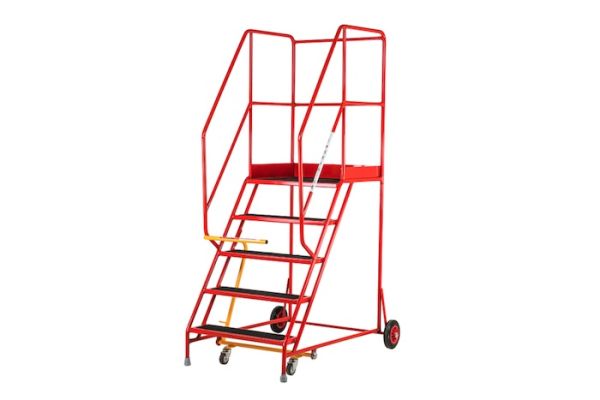
Available in a choice of four heights, this ladder is provided on wheels and includes handrails and guardrails to allow users to safely undertake work at height.
Narrow Ladders
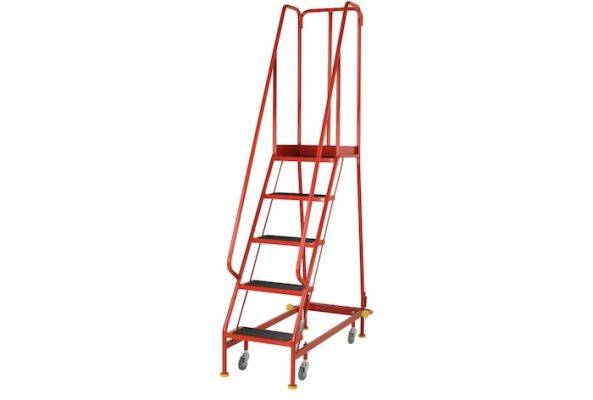
Ideal for picking items in narrow areas, the 500mm-wide ladder is supplied with wheels and includes retractable spring-loaded castors and slide-out stabilisers for optimum safety.
Steel Mobile Steps
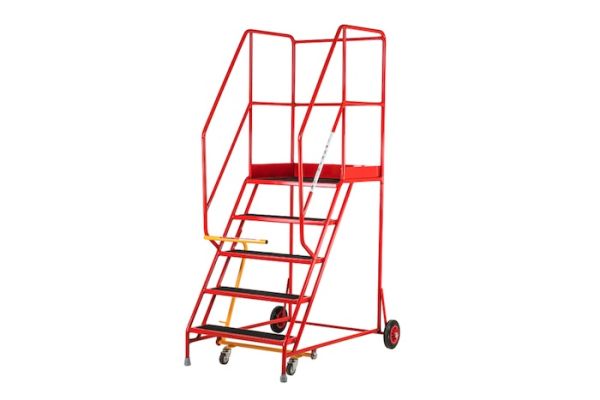
Available with an anti-slip or punched metal surface, the BN131-7 industrial ladder is designed to support working heights up to 3.3m. Includes handrails, guardrails, and toeplates.
Trade Step Ladder
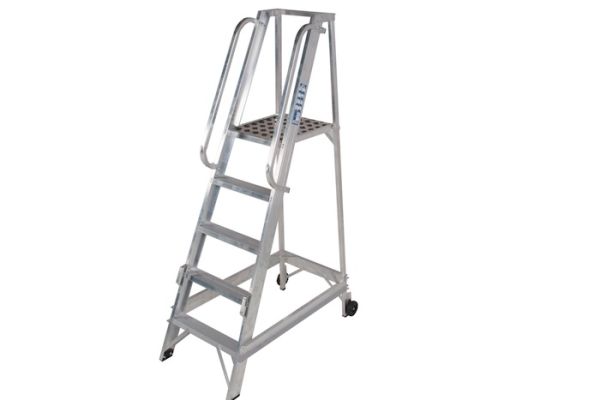
Available in five heights, the Trade Step Ladder is lightweight and fitted with wheels, allowing it to be tilted and manoeuvred with ease. Double handrails provide additional support.
What are the British Standards for ladders?
In the UK, portable ladders are covered by BS EN 131-1. This standard defines the terms, types, and sizes of ladders. For example, for Telescopic Ladders, you should refer to BS EN 131-6. For mobile ladders with platforms, BS EN 131-7 applies. These standards provide guidance and are often used to demonstrate that a ladder is safe for use. However, they are not a legal requirement.
When Can Ladders Be Used in the Workplace?
The HSE recommends that ladders should only be used for short-duration tasks, typically those taking less than 30 minutes.
A risk assessment must be completed before using a ladder to ensure it is suitable for the task and that the user is protected from the risk of falls. For example, a ladder should only be used on flat, level ground where it can be secured to ensure stability during use.
It is also important to consider external hazards. In a warehouse, for instance, ensure the ladder will not be struck by a moving forklift and will not obstruct emergency exits.
What Inspections Do Ladders Require?
Ladders should be regularly checked for signs of wear and damage. If any wear or damage is noted, the ladder must not be used.
It is recommended that ladders are inspected daily and before each use. Records should be kept of these checks.
Key checks include ensuring the ladder is not cracked, worn, or damaged—particularly on the feet and rungs.
How to Use a Ladder Safely
When using a ladder, it is important to mitigate the risk of falls or injury. Requirements can vary depending on the type of ladder, but the following are key safety practices:
- Always use the ladder in line with the manufacturer’s guidance and ensure it is fit for the task. For example, consider a ladder with a platform if the user needs to stand and work at height.
- Users must be competent or have completed appropriate training. Only one person should be on a ladder at any time.
- Set the ladder to the correct height to avoid overreaching.
- Maintain three points of contact when climbing (e.g., both feet on the treads and one hand on the handrail).
- Do not overload the ladder. Check the maximum capacity and only carry light items where possible.
Professional vs Non-Professional Ladders
BS EN 131provides details of non-professional and professional ladders.
While both types have the same load capacity, professional ladders are designed for commercial use and built to be more durable than domestic ladders. The standard is available is various parts, for example BS EN 131-7 focuses on Mobile ladders with platforms.
Steel vs Aluminium Ladders
Aluminium ladders are generally lightweight and easy to move. However, they must not be used near open electrical wires due to the risk of electric shock.
Steel ladders are heavier but typically more durable, making them ideal for those seeking a long-lasting solution.
Safety Step Stools
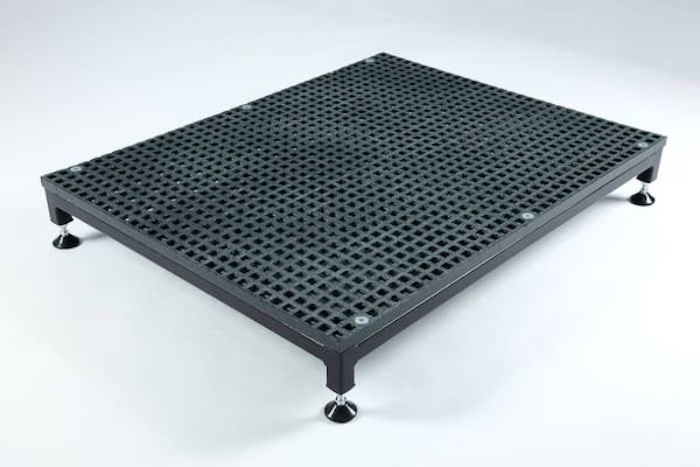
For lower heights step stools can be used to safely allow employees and contracts to reach higher heights. These are a popular choice for allowing users to safely reach areas which are slightly out of reach, such as when they need to organise or clean shelves.
Still Require Assistance? Request a callback
Our team is available throughout the week to help via phone, email, live chat or WhatsApp. If you’d rather we call you, you can easily request a callback here.