



What Does 'DDA Compliant' Mean?
What Does 'DDA Compliant' Mean?
'DDA' refers to the Disability Discrimination Act 1995. The DDA Act outlined the definition of 'disability' and 'disabled person'. The act also provided requirements for relevant parties including employers and office-holders to prevent discrimination and harassment. For example, the act made it unlawful for an employer to discriminate against a disabled person. The Act also outlined requirements to make reasonable adjustments for those with disabilities.
In 2010 the Disability Discrimination Act (DDA) was replaced by the Equality Act
Regulations & Helpful Links
The Disability Discrimination Act (DDA) made it unlawful to discriminate against disabled people in relation to employment, providing goods, facilities and services.
The Equality Act has been designed to reduce inequalities, discrimination and harassment based on a persons characteristics.
Equality Act 2010 explained
- The Equality Act covers physical and mental impairments. The act classes an impairment to be long-term if it has lasted, or is expected to last for a duration of 12 months or longer. Certain conditions, such as cancer, HIV and Multiple Sclerosis (MS) are listed as a disability within the act.
- The Equality Act is designed to protect those with disabilities, progressive conditions and those receiving treatment for a disability. The act ensures that those who are disabled are not treated unfavourably because of something arising in consequence of their disability. The act also covers indirect discrimination.
- Section 20 focuses on the duty to make reasonable adjustments. This section is commonly focused on regarding the need to provide ramps in locations to ensure a property is accessible to all. Individuals and companies are required to take reasonable steps to ensure those with disabilities are not placed at a disadvantage. For example, if you are a company you may wish to consider installing grab rails and ramps to allow wheelchair users to access a building with steps. The disabled individuals cannot be charged to pay for the cost of the adjustments.
- The Act's disability protections apply across: services and public functions, premises, work, education, and associations
What is a Reasonsable Adjustment - Examples in practice?
- When considering what counts as a reasonable adjustment it is important to consider various factors such as the type of business, size of the business, cost and practicality. It is also important to ensure the adjustment does not put others health and safety at risk.
- For example, if a restaurant has a single small step at the entrance leading into a garden seating area, it may be considered a reasonable adjustment under the Equality Act 2010 to provide a portable access solution, such as a rubber threshold ramp or folding wheelchair ramp, where this can be used safely and practically by staff.
- In contrast, where a building has a longer flight of steps opening onto a busy public pavement or road, a simple portable ramp may not be sufficient or safe and could pose a risk to the wheelchair user and those lifting the ramp. In these cases, a permanent or semi-permanent ramped access solution may need to be considered instead or, where possible the business could look at alternative access arrangements.
Who decides if the adjustment is reasonable?
The responsibility for making reasonable adjustments lies with employers and service providers (shops, restaurants, schools, hospitals).
If in a business an employee does not feel reasonable adjustments have not been made, an individual can make a complaint against their employer. In general employees should raise this with management and HR first internally. Advice can be sought from ACAS. On some instances it would lead to an employment tribunal
In schools and colleges, students should speak to the Disability Adviser at first regarding any concerns. If you do not recieve the adjustments, you can raise an appeal or contact the Equality Advisory & Support Service.
If a business has not made reasonable adjustments, for example a shop or restaurant, it is recommend you first try to speak to the company about this either in person or by writing. The matter can be escalated further in court if needed.
Request a callback
Although the term “DDA compliant” is still widely used, it refers to older legislation that has now been replaced by the Equality Act 2010. The current law requires organisations to make reasonable adjustments so that disabled people are not placed at a disadvantage when accessing services, employment, or public spaces.
Still need assistance? Our team is available throughout the week to help via phone, email, live chat or WhatsApp. If you’d rather we call you, you can easily request a callback here.

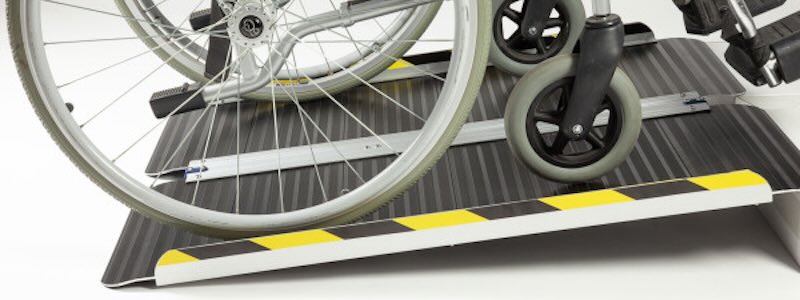
Portable vs Permanent Wheelchair Ramps: Pros and Cons
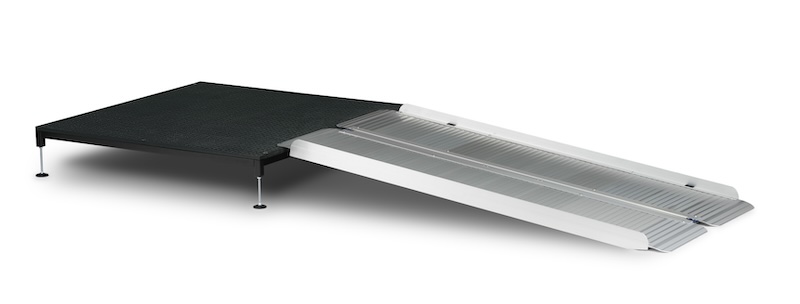
Wheelchair Turning Platforms: Access Solutions for Tight Spaces

How to Choose the Right Wheelchair Ramp for Your Needs
- Categories:
- All
- Vehicle & Plant Loading Ramps
- Wheel Stops
- Workplace Safety
- Speed Bumps
- Accessibility & Disability
- Wheelchair Threshold Ramps
- Truck & Van Ramps
- Cable Covers & Protectors
- Road Safety
- Yard & Container Ramps
- TRP News
- Pet Ramps
- Car Ramps
- Tips and Product Guides
- Customer Case Studies
- Wheelchair Ramps
- Loading Ramps
- Workplace and Health & Safety