



The Complete Guide to Workplace Cable Management
The Complete Guide to Workplace Cable Management
Cable management in the workplace it essential to keeping the workplace tidy, protecting cables from damage and of course protecting employees.
Loose cables are hazardous and can cause trips. Cable management is a practical, cost-effective way to improve safety, reduce liability and create a more professional working environment.
Why Cable Management is a Legal Requirement
- In the UK, employers have a legal duty under the Health and Safety at Work Act 1974 and the Workplace (Health, Safety and Welfare) Regulations 1992 to ensure workplaces are safe and free from hazards. Trailing cables fall squarely into that remit.
- The Health and Safety Executive (HSE) lists slips, trips, and falls as the most common cause of workplace injury, accounting for around a third of all reported incidents. A significant proportion of these involve cables, leads, and wiring that haven't been properly managed.
- It's not just about avoiding fines. A trip from an unprotected cable can result in broken bones, head injuries, and significant time off work, for the employee and for the business.
- When placing cables on pavements and roads, the Highways Act 1980 should be referred to. If an accident occurs due to your cable, you will be held liable and therefore it is essential they are managed safely.
The Most Common Workplace Cable Hazards
- Before choosing a solution, it helps to understand the problems you're dealing with. In most workplaces, cable hazards fall into a few familiar categories:
- Cables across walkways - A power cable or data lead runs from a wall socket to a desk or piece of equipment and crosses a path people regularly walk. Even a cable at floor level creates a trip risk, especially in busy environments or where visibility is poor.
- Temporary setups that become permanent - Extension leads and temporary power solutions introduced during a fit-out, event, or equipment change have a habit of never being removed. What was meant to last a week becomes a fixture without ever being properly managed.
- Cables in high-traffic industrial areas - In warehouses, factories, and logistics environments, cables face far more aggressive conditions: forklift traffic, pallet trucks, heavy foot traffic, and machinery. A standard cable cover designed for an office simply won't cut it.
Types of Cable Protectors
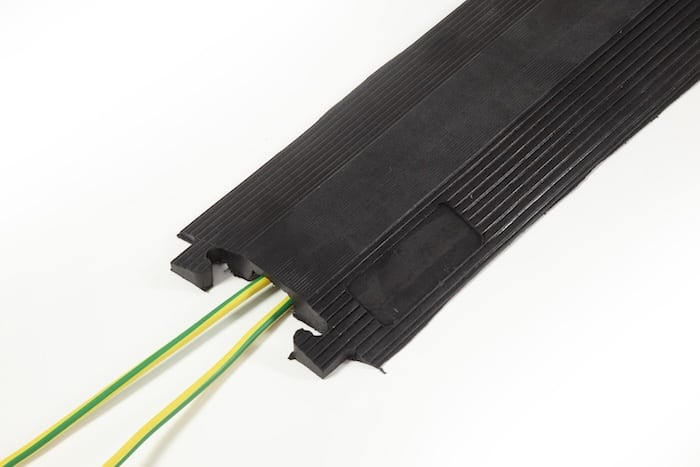
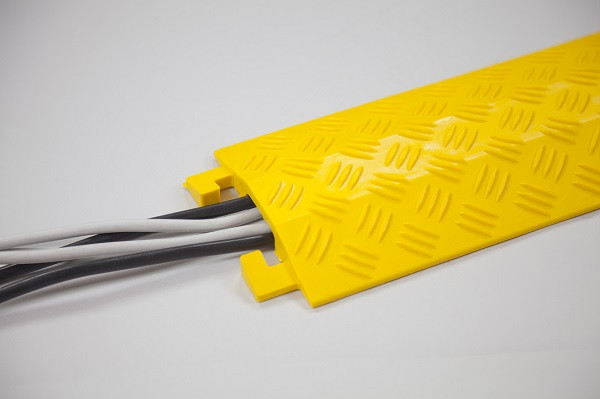
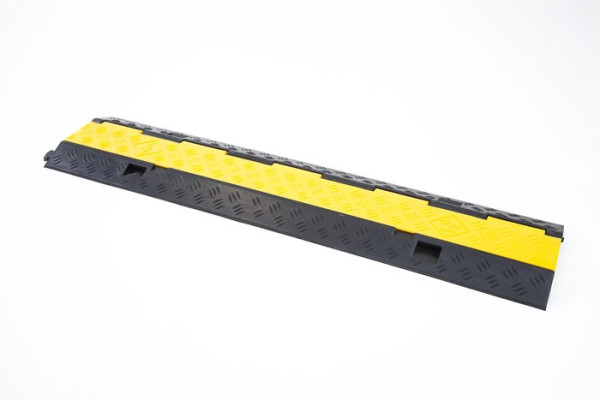
- Floor cable protectors - Available in lengths from 1m to 9m, the lightweight cable protectors protect smaller cables and wires from pedestrian traffic and light trolleys. Easy to use, simply snap open and insert the cables. They are generally found in offices, homes and at events.
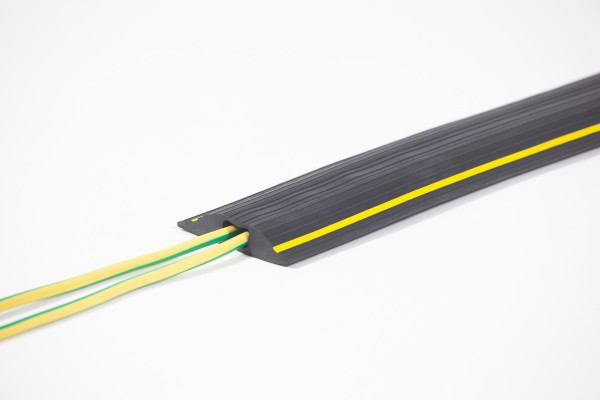
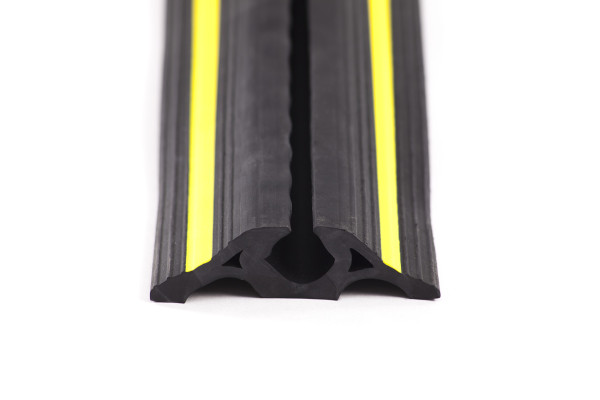
- Cable Covers - Cable covers are manufactured from plastic or rubber. The cable covers are designed to protect smaller cables and wires from pedestrians and light trolleys. Some models are also suitable for light vehicles. Available in all black or all yellow, simply drop the cable cover over the cable and start using. Interlocking, connect multiple units to cover your required length. Cable covers are commonly used in the office, driveways, on pavements and at events.
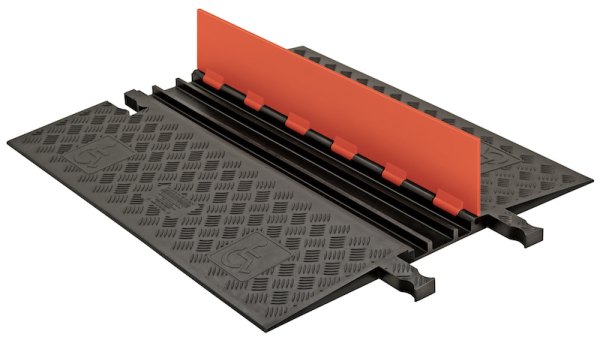
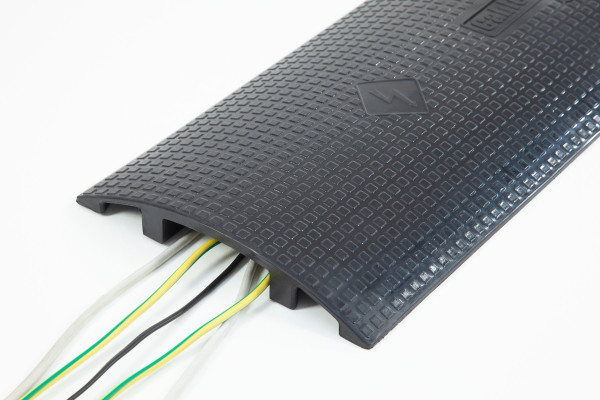
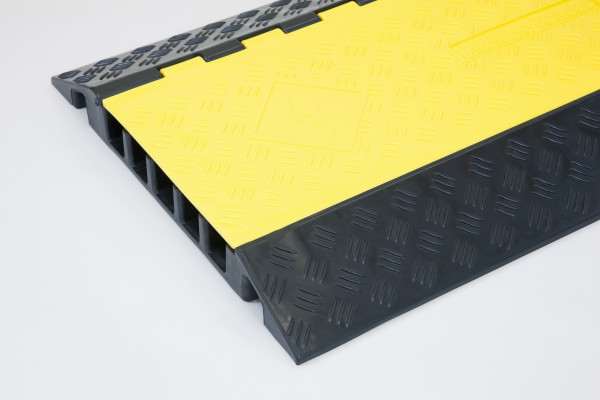
- Heavy Duty Cable Protectors - Protect cables from vehicle traffic. The heavy duty cable protectors come in a range of designs and can protect larger cables. Solutions including heavy duty interlocking solutions with 1, 2, 3 or 5 channels. Heavy duty cable ramps are commonly used at events, festivals, in car parks and on roads.
- Hose Protectors - Protect large cables and hoses from vehicle traffic including HGVs. With a modular design, multiple units can be connected together to cover larger areas. Available with 2 channels. Hose protectors are commonly found on industrial estates, roads and construction sites.
The Cost of Not Protecting Cables
- It can be tempting to treat cable management as a low-priority, especially when there are event deadlines to meet or other purchasing requirements. It is important to consider the risks of not protecting cables, especially as cable management is often relatively cheap with many cable protectors lasting for years.
- A single workplace trip claim can run into tens of thousands of pounds when you factor in legal costs, compensation, and increased insurance premiums.
- HSE improvement notices and prohibition notices can result in operational disruption and significant reputational damage.
- Cable damage caused by poor protection leads to equipment failure, downtime, and replacement costs. For example, if the forklift charging cable is damaged it could prevent your team being able to pick items for several days.
- A disorganised, hazardous-looking workplace affects staff morale, client impressions, and recruitment.
Cable Protectors & Cable Covers for the Office
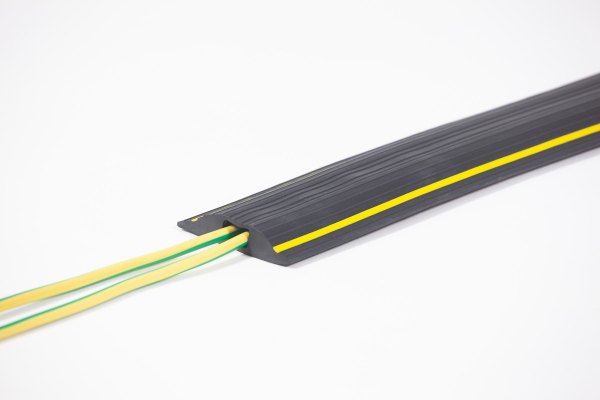
Office environments often require cable protectors to mitigate trip hazards and maintain a tidy workspace. These protectors frequently remain in place for years, shielding critical infrastructure—such as ethernet, fibre optic, and power lines, that power essential equipment. Cables within the office are often small and therefore floor cable protectors or cable covers are often a popular choice. Lightweight cable protectors are often chosen as they are smaller and a lower capacity is required as within the office generally only foot traffic and the occasional trolley passes over the cable ramps.
It is important to consider what colour cable ramp you would like. If the cable ramp is in a public area a yellow or black and yellow solution is generally recommended. If the cable ramp is hidden under the desk and will not cause a trip hazard, you may prefer an all black design for a discreet look.
Cable Protectors for Warehouses
Within warehouses cable protectors are commonly used to protect cables which charge machinery including forklifts. They may also be needed during peak season when temporary inventory stations are set up with extra labelling printers, seasonal conveyor belts, scanner charging points or similar.
When seeking a cable ramp for the warehouse, it is vital to consider what will be passing over the cable protector to ensure you choose the right one. Some areas in the warehouse are dedicated to foot traffic only however other areas may have pallet trucks and forklifts passing over the cables. For this it is important to seek a cable ramp which can handle the weight of the machine but also one which offers a smooth enough gradient for the low clearance machinery to prevent them bottoming out when overcoming the cable protectors.
At The Ramp People we offer a range of low-profile cable protectors designed to allow low clearance vehicles to safely overcome cable protectors.
Cable Protectors for Car Parks
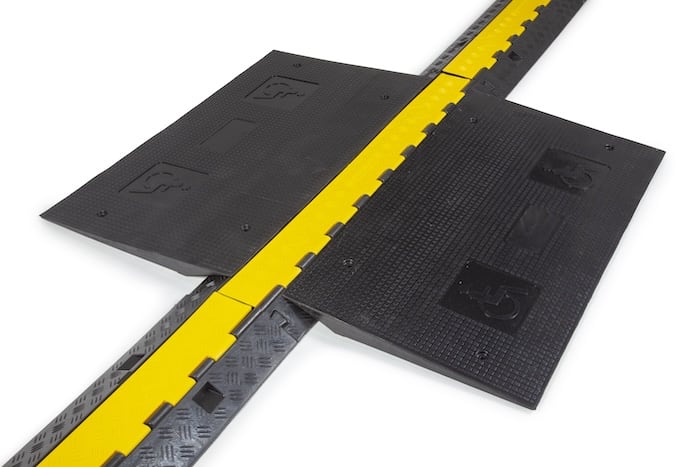
An increasing number of businesses now have EV charging points within their car parks. It is essential to protect these cables from damage whilst reducing the risk of trip hazards whether the cables are on the pavement or in a parking bay. Cables may also be found in the car park when maintenance works are being undertaken, for example if the office car park is being used for a corporate event or contractors are completing works in the car park.
At The Ramp People we offer a selection of cable ramps designed to protect cables from foot traffic and vehicles. Interlocking, they can easily be connected to cover your required cable length whilst the high visibility design alerts passers-by and drivers to their presence.
Accessible Cable Protectors
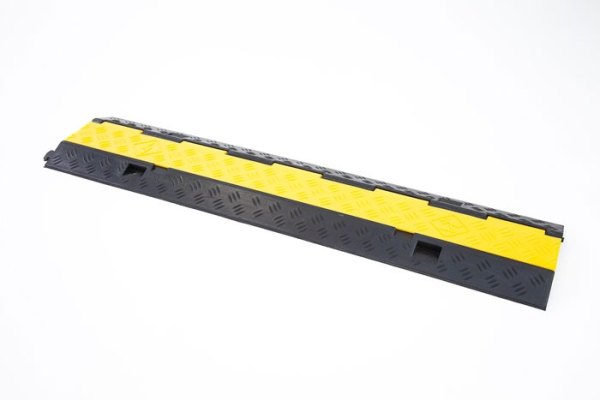
Accessibility is a cornerstone of an inclusive workplace, especially during events. Standard high-profile cable protectors can act as barriers, preventing individuals using mobility aids—such as walkers, rollators, and electric wheelchairs—from moving freely. To ensure full compliance with the Equality Act and provide a safe environment for everyone, cable management must be "barrier-free."
At The Ramp People, we provide a specialised range of cable ramps designed with smooth, gentle gradients. These allow users to transition over cables safely and independently, ensuring your workspace remains truly accessible to all.
Final Thoughts
- Cable management is the kind of thing that tends to get noticed only when it goes wrong. The goal is to make it invisible, a hazard that simply doesn't exist, because it's been properly dealt with.
- The good news is that achieving that standard isn't complicated or expensive. The right cable protectors, properly installed and regularly maintained, will handle the vast majority of workplace cable hazards. Combined with a clear policy and a culture of taking small hazards seriously, it's entirely achievable for businesses of any size.
- If you're unsure where to start, walk your workplace today. Look for cables crossing walkways, running through doorways, or lying in areas where vehicles operate. That's your starting point — and from there, the solutions are straightforward.
Request a callback
Still need assistance? Our team is available throughout the week to help via phone, email, live chat or WhatsApp. If you’d rather we call you, you can easily request a callback here.

The Best Heavy Duty Cable Covers for Industrial and Event Use

EV Cable Protector

Outdoor Cable Protectors
- Categories:
- All
- Vehicle & Plant Loading Ramps
- Wheel Stops
- Workplace Safety
- Speed Bumps
- Accessibility & Disability
- Wheelchair Threshold Ramps
- Truck & Van Ramps
- Cable Covers & Protectors
- Road Safety
- Yard & Container Ramps
- TRP News
- Pet Ramps
- Car Ramps
- Tips and Product Guides
- Customer Case Studies
- Wheelchair Ramps
- Loading Ramps
- Workplace and Health & Safety