



The main disability benefits available
We often focus on the emotional and psychological effects of living with a disability but the fact is there are also significant financial concerns. Whether its everyday support from a carer or special equipment to make the home more liveable, living with a disability can be extremely costly.
Fortunately, the government offers a wide range of allowances, grants and tax reliefs to help with these costs. We’re going to look at the main disability and sickness benefits but remember there are plenty of other benefits you can get in addition to these including vehicle and housing benefits.


Why disability benefits are so important
Compared to those living without one, people with a disability are much more likely to struggle financially. The costs associated with having a disability can quickly pile up, from care and support to special equipment. This means that a substantially higher proportion of people who live in families with disabled members live in poverty compared to those where no one is disabled. In fact, 19% of families with disabled members live in relative income poverty compared to just 15% of families without. This means people living with a disability can struggle to afford even everyday items as well as leisure activities. While no one is happy when they can’t spend time or money on leisure activities or getting about, for those with a disability this can be even more of a struggle as it diminishes their already limited sense of freedom and mobility. Ensuring people with a disability can afford these things are just as important for their happiness as it is for their practical well-being.Main disability and sickness benefits
There are a few main disability benefits available to people with disabilities. Most of them are determined by your age but can also on your situation such as whether you are employed. While there are further additional benefits that can apply on top of these, they are the core benefits that are accessible to anyone with a disability, as well as a separate benefit for carers looking after someone with a disability.
Disability Living Allowance (DLA)
DLA for children is a tax-free benefit for children under 16 to help with the extra costs caused by long-term ill health or disability. It has 2 components and a child may benefit for one or both of them depending on their circumstances. It is usually paid every 4 weeks into your bank, building society or credit union account. To qualify, they must be under 16 and have lived in Great Britain for 2 of the last 3 years and be habitually resident in the UK, Ireland, Isle of Man or the Channel Islands. Additionally, they’ll qualify if they have difficulty getting about or need much more care than a child of the same of the same age without a disability for at least 3 months. They will then be awarded either or both of the following components: Care component – dependant on the level of care they need- Lowest rate – help for some of the day or night
- Middle rate – frequent help or constant supervision during the day, supervision at night
- Highest rate – help or supervision throughout the day and night
- Lowest rate – they can walk but need outdoor help and supervision
- Highest rate – they cannot walk, can only walk for a short distance without severe discomfort, could become ill if they walk or they’re blind or severely sight impaired
Personal Independence Payment (PIP)
Originally there was also DLA for adults, but PIP is slowly replacing it for ages 16 – 64. It is also a tax-free benefit for people to help with the extra costs caused by long-term ill health or disability. As with DLA, you must be habitually resident in Great Britain. There are some exceptions that can make you eligible if you’re not a British citizen or living abroad. There are also two components that you be eligible or either one or both of. For the daily living difficulties part, you can get PIP if you need help more than half the time with things like preparing or eating food, washing or bathing, dressing, reading, managing money and so on. The weekly rate is either £57.30 or £85.60. For the mobility difficulties part, you can get PIP if you need help going out or moving around. The weekly rate is either £22.65 or £59.75. Both parts of PIP are paid every 4 weeks tax-free and is available if you’re in or out of work. Eligibility is assessed by an independent healthcare professional to help work out the level of help and support needed. You can claim by telephone or textphone, or find out more information here.Attendance Allowance
A tax-free benefit for people aged 65 or over who have a disability and need someone to help look after them. It is also paid at 2 different rates dependant on the level of support needed, either £57.30 for frequent help or constant supervision during the day or night or £85.60 a week for supervision through the day and night. It is for anyone over the age of 65 with a physical or mental disability but does not cover mobility needs. Again, you will need to be a resident in Great Britain unless you meet the eligibility exceptions. Find out more here.
Employment and Support Allowance
ESA is available to those who can’t work because of illness or disability, or provides help to ensure that you can work if you’re able to. You can apply for ESA if you’re employed, self-employed or unemployed. A Work Capability Assessment will be used to assess to what extent your disability affects your ability to work. There are three types of ESA:- ‘new style’ ESA for those entitled to claim Universal Credit.
- Contributory ESA if enough National Insurance contributions have been paid.
- Income-related ESA for a low-income. This can be given on its own or in addition to contributory ESA.
Carers
Carer’s Allowance is extra money to help you look after someone with substantial caring needs. You don’t have to be related to or live with the person you care for but you must be looking after them for at least 35 hours a week and they must be receiving certain benefits themselves to receive the £64.60 rate. You can find out more about carers allowance here. Carer’s Credit is also available so there are no gaps in NI record if you have to take on a caring responsibility. Depending on additional circumstances you might also be able to get:- Industrial Injuries Benefit if you’re disabled because of work.
- Constant Attendance Allowance if you need daily care and attention because of a disability.
- The disability element of Working Tax Credit if you are getting PIP or DLA. This is a tax relief from the government to help supplement a low income.
Know your benefits
Many of the benefits available can be awarded in addition to each other as long as the eligibility is met, so don’t be afraid to look around and ask what other benefits you might be eligible for. There are plenty of charities and public bodies like Citizen’s Advice that can help you navigate the benefits system. There are also benefits calculators to help you work out what you could get. Related Posts
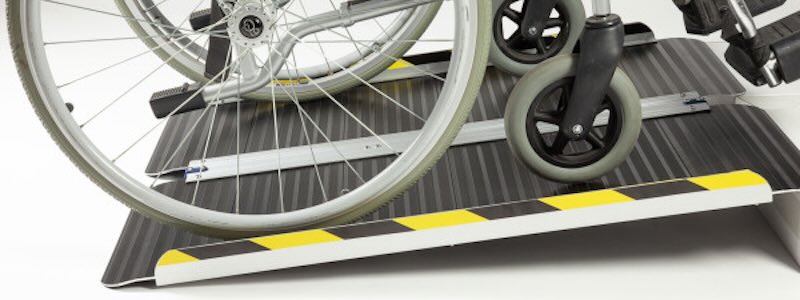
Portable vs Permanent Wheelchair Ramps: Pros and Cons
Choosing Between Portable and Permanent Wheelchair Ramps Wheelchair ramps play a vital role in improving accessibility for wheelchair users, mobility scooter users, and those with limited mobility. Choosing between a portable, semi-permanent, or permanent ramp depends on several factors, including how often the ramp will be used, the location, ...
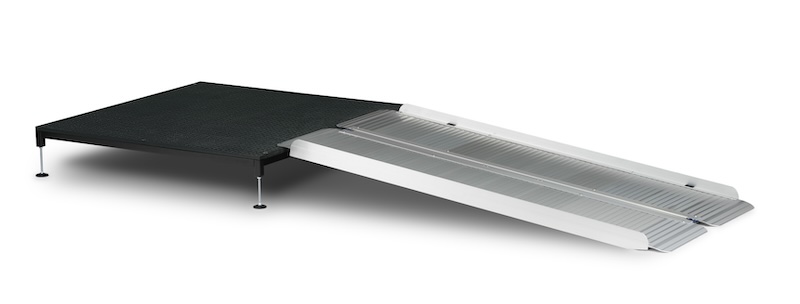
Wheelchair Turning Platforms: Access Solutions for Tight Spaces
Wheelchair Turning PlatformsAt The Ramp People, we are excited to announce the launch of our new Adjustable Turning Platform, designed for use at heights between 80mm and 185mm. A wheelchair turning platform provides a safe, level area that allows wheelchair users to change direction before descending a ramp. Whether taking a 90-degree turn, ...

How to Choose the Right Wheelchair Ramp for Your Needs
At The Ramp People we understand that choosing a wheelchair ramp can be difficult, especially if it is the first time you are purchasing a ramp. We have a team of dedicated experts on hand available via phone, email, WhatsApp and web chat to assist with all of your enquiries, whether you are seeking a lightweight portable ramp which can be stored ...
- Categories:
- All
- Vehicle & Plant Loading Ramps
- Wheel Stops
- Workplace Safety
- Speed Bumps
- Accessibility & Disability
- Wheelchair Threshold Ramps
- Truck & Van Ramps
- Cable Covers & Protectors
- Road Safety
- Yard & Container Ramps
- TRP News
- Pet Ramps
- Car Ramps
- Tips and Product Guides
- Customer Case Studies
- Wheelchair Ramps
- Loading Ramps
- Workplace and Health & Safety