



Disabled Access Regulations and Part M Ramps
What is Part M and why you might need to be compliant
Part M building regulations are the standard to which all building work in the UK is measured against. Part M building regulations deal specifically with the access to and use of buildings, and is an important part of enforcing The Equality Act 2010. There are specific sections concerning disabled ramp regulations and other accessibility, and the basic requirement of Part M regulations is that everybody, including anyone with a disability, should be able to access every part of a building. There are Part M disabled access regulations for both dwellings and other buildings, such as public buildings or landmarks. Both outline the reasonable adjustments and safe requirements that any building work needs to adhere to. This encompasses everything from building sanitation to ensuring there is enough space through doors and hallways for wheelchair access. Arguably the most important part of the regulations addresses disabled access to buildings, with guidelines for the safe gradients, platforms and space outside the entrance to ensure wheelchair users can enter the building safely. While public buildings and services such as doctor’s surgeries and educational establishments have a legal obligation to comply with Part M disability building regulations, everyone has a responsibility to provide disabled access to buildings.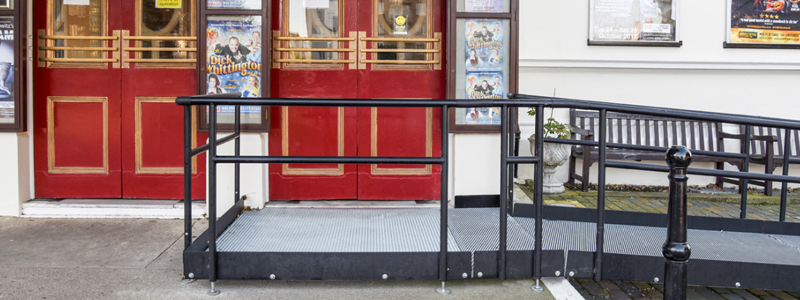
Wheelchair ramp regulations
If you’re in need of a semi-permanent wheelchair ramp solution and want to make sure you’re compliant with Part M wheelchair access regulations, here’s a few things to consider.The wheelchair users
Standard wheelchairs and mobility scooters or electric wheelchairs often require a different type of ramp to accommodate the difference in weight. If you’re looking for a Part M ramp, you’ll need to consider what type of wheelchair you need to provide access for. If it’s a residential property, you may know you only need to provide wheelchair access for one type of wheelchair. Public buildings will usually need a modular ramp that can handle both. This will also affect the width of the ramp you need, and high traffic areas may also want to consider a wider ramp. Additionally, you’ll have to consider the platforms outside the entrance and at the end of each level. Part M disabled ramp regulations outline the minimum standard for platforms to enable wheelchair users to turn safely, but scooters or high traffic areas may also want to think about bigger platform areas.
Pedestrians
Other pedestrians are also still an important consideration when looking at Part M building regulations and wheelchair access. The surface of the ramp needs to be safe for walking pedestrians as well as wheelchair tires, especially as ramps can often collect water and cause the slope to become slippery. Similarly, handrails can be more dangerous than safe without the proper considerations. Children for example often play on the handrails, and gaps in the bars can allow them to fall. Ramps accommodating a high load height may also have gaps underneath the ramp itself and present another potential hazard.The space
You will also need to consider your load height and how this will affect the overall length of the ramp and the space needed, compared to the space you have. Wheelchair ramp regulations clearly outline safe gradients that need to be adhered to. For tall load heights, this can often result in extremely long ramp lengths which can be a problem for buildings with a smaller outside entrance space. Platforms are needed in these situations to help fit the ramp in, but you will need to think about how obstructive the ramp is and the best way to ensure it stays safe for all users and meets Part M buildings regulations.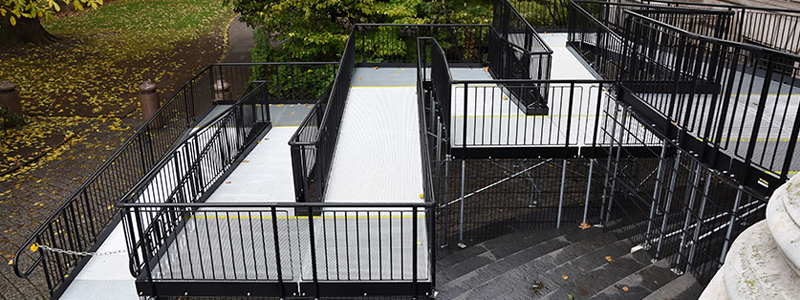
The benefits of our Part M ramps
Complying with disabled ramp building regulations can seem daunting. Fortunately, we have over 25 years’ experience in the industry and work with an experienced partner to guide you through the process from start to finish. We can work with small entrances, high load heights and complex requirements to ensure you meet disabled access ramp building regulations. Working with a partner with building expertise, you’ll enjoy a fast and efficient service for a speedy planning and building process, and we’ll always work to find you the most affordable solution.The wheelchair users
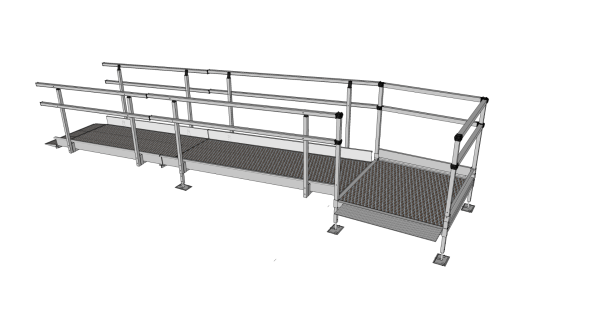
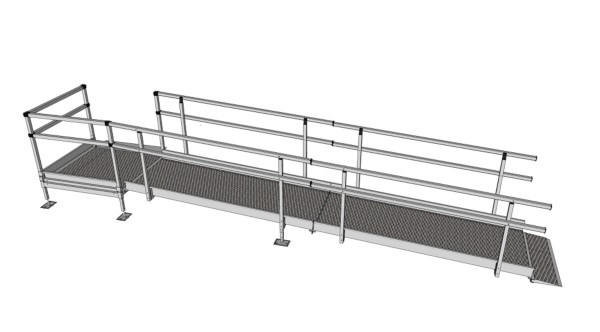
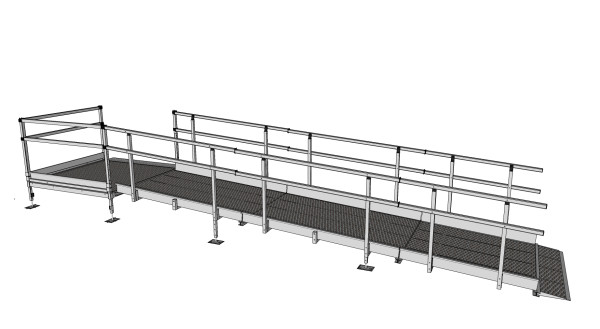
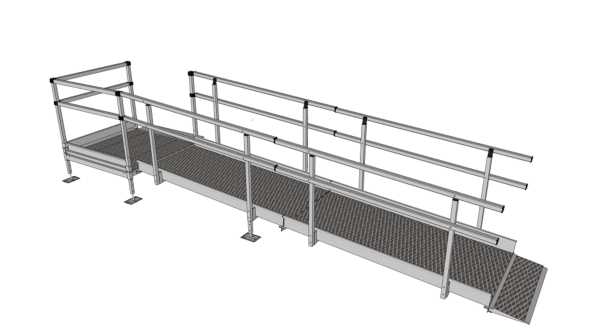
Our Part M Ramps offer you the option to customise the width and our detailed knowledge of safety gradient requirements ensure your ramp is both safe for all users and compliant with Part M building regulations. From our platforms to our ramp lengths, these ramps come at the minimum Part M safety requirements as standard, with the option to customise the measurements to suit your needs and accommodate all wheelchair types. You can also opt for highlighted level changes, with high visibility stickers indicating a change in level to ensure maximum wheelchair safety. This is especially important when the ramp is in use during poor weather or in the evening and night time.
The pedestrians
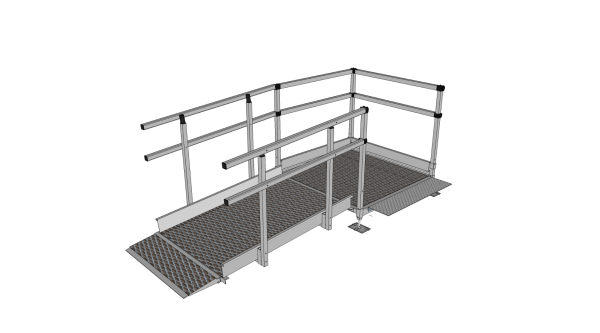
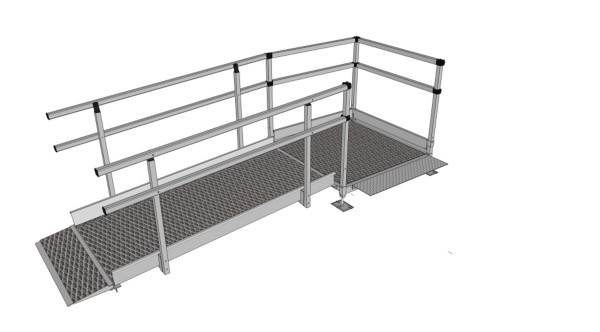
Because disabled access regulations aren’t just about the wheelchair users, our ramps come with a highly durable slip-resistant surface. Ideal for ensuring safe access during both dry and wet weather, we can also provide a perforated surface to allow any water through. This ensures that the ramp surface doesn’t collect any water and become too slippery. For Part M handrails, we choose from a range of custom options that are compliant with disabled access ramp building regulations with a focus on safety. Opt for infill handrails with a variety of infill bar options to protect all users, particularly children, who could fall. Similarly, an infill skirt on the bottom of the ramp protects the underneath.The space
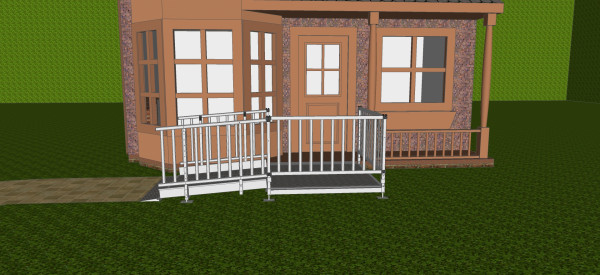
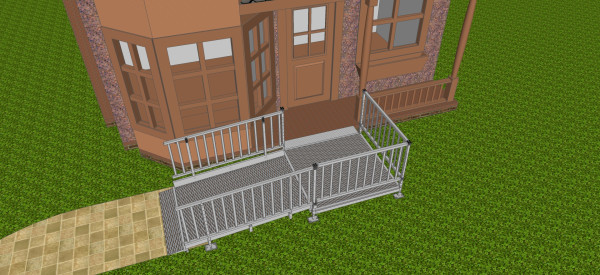
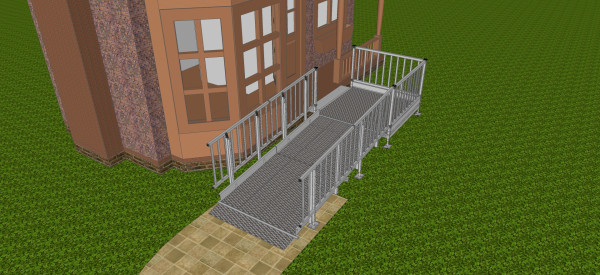
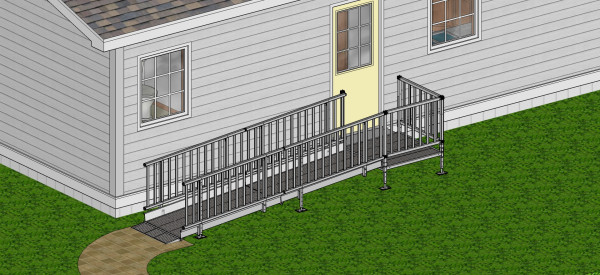
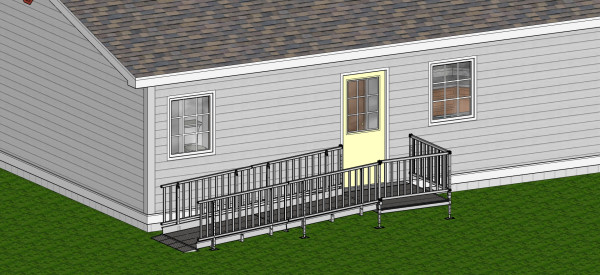
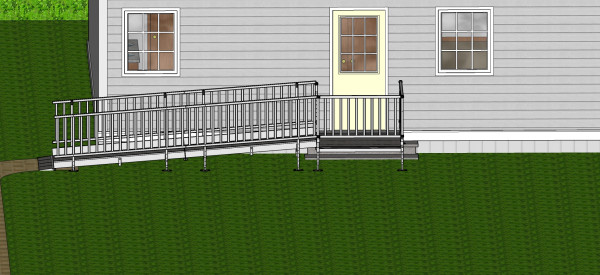
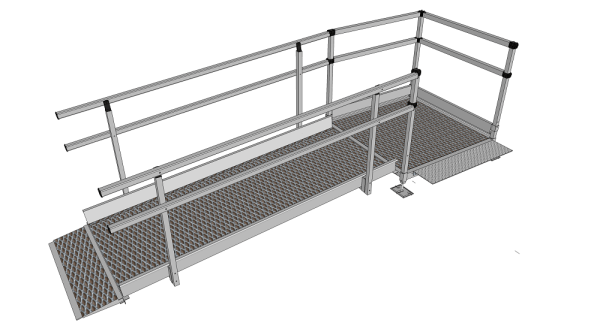
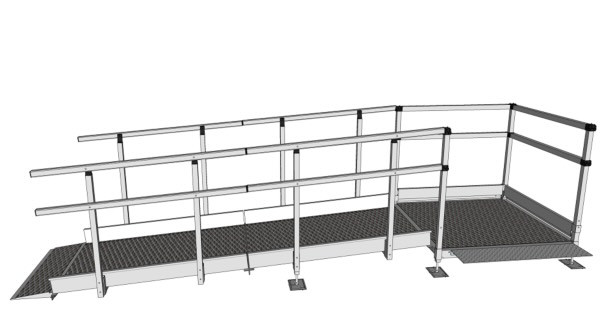
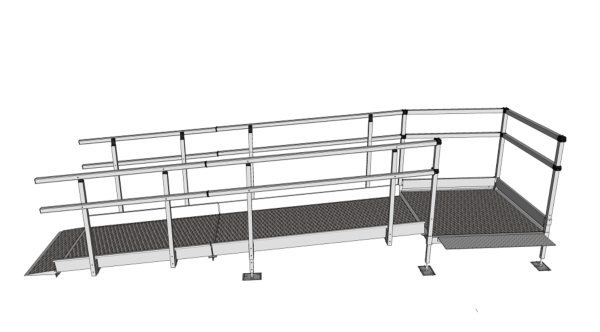
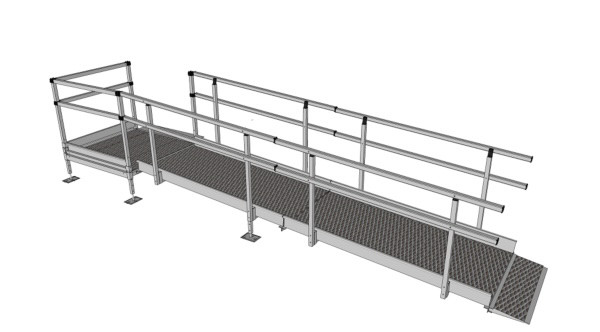
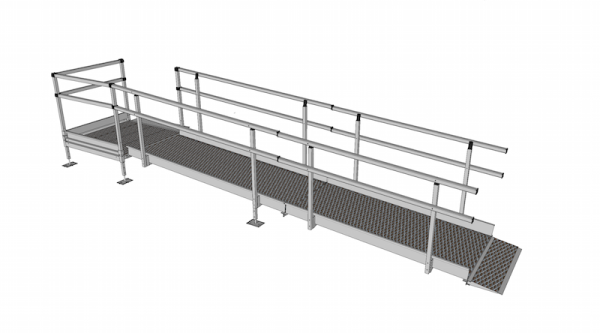
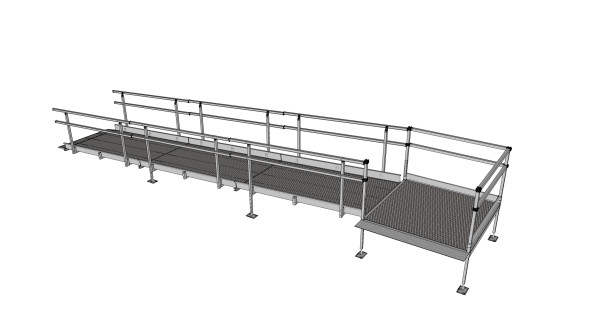
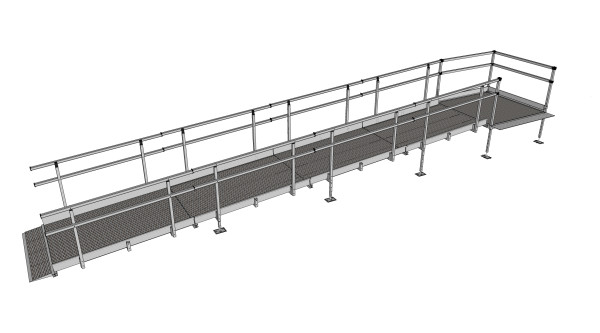
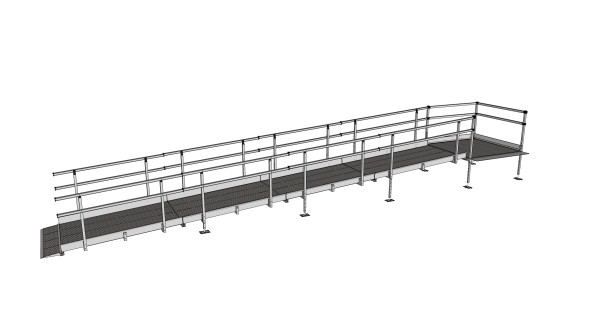
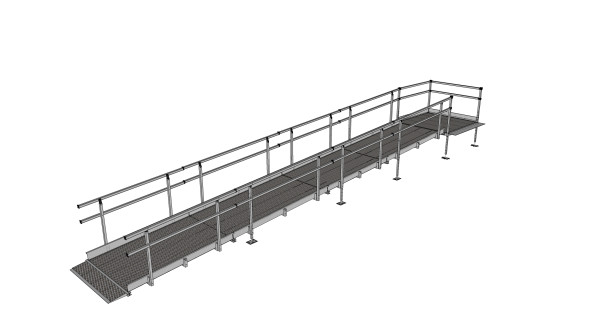
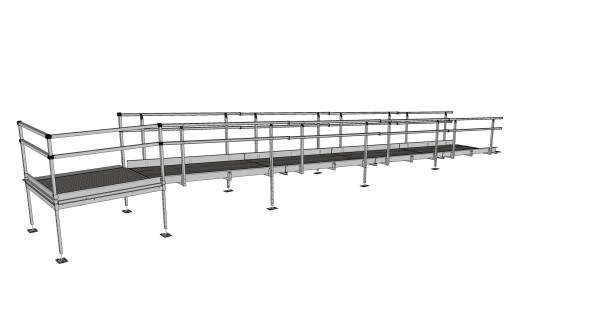
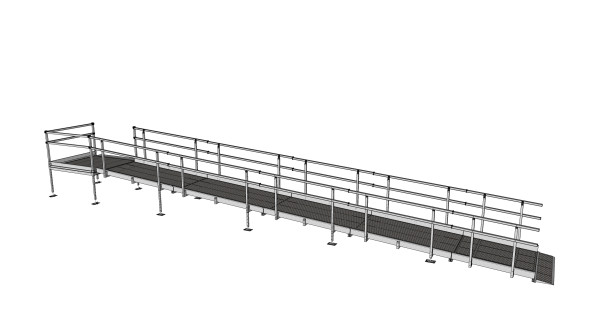
Working closely with you from the very start, our qualified team will use your requirements and measurements to produce detailed 3D drawings and plan the right ramp fit for the space. For smaller entrances, we can help to plan out a multi-level ramp solution with a safe gradient and un-obstructive layout. Our qualified partner will then take over the build process. To top it all off, our partner guarantees a high-quality finish and efficient process from start to finish. Made from high-grade materials and fitted by industry professionals, our Part M ramps offer unparalleled quality and affordability.
Contact us today
Simply call one of our friendly sales team to start discussing your Part M compliant wheelchair access solution today. Alternatively, if you’re looking for a more temporary solution that doesn’t need to be Part M compliant, our modular wheelchair ramp offers a similarly high-quality finish.Disabled Access Regulations and Part M Ramps
- While many of our wheelchair ramps are perfect for temporary use and occasional access, often there is a need for a more permanent access solution. This is where our custom ramp service comes in. We can offer Part M ramps that are fully compliant with UK building regulations for disabled access. Just like our modular ramps, your custom solution will be a robust semi-permanent ramp for safe wheelchair access, but will also be completely compliant with Part M and Part K building regulations.
What is Part M and why you might need to be compliant
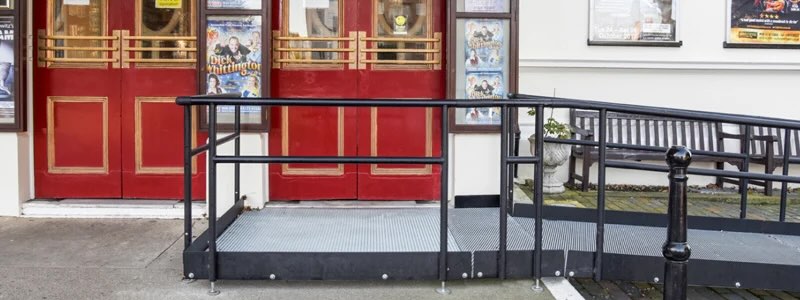
- Part M building regulations are the standard to which all building work in the UK is measured against. Part M building regulations deal specifically with the access to and use of buildings, and is an important part of enforcing The Equality Act 2010. There are specific sections concerning disabled ramp regulations and other accessibility, and the basic requirement of Part M regulations is that everybody, including anyone with a disability, should be able to access every part of a building. There are Part M disabled access regulations for both dwellings and other buildings, such as public buildings or landmarks. Both outline the reasonable adjustments and safe requirements that any building work needs to adhere to. This encompasses everything from building sanitation to ensuring there is enough space through doors and hallways for wheelchair access. Arguably the most important part of the regulations addresses disabled access to buildings, with guidelines for the safe gradients, platforms and space outside the entrance to ensure wheelchair users can enter the building safely. While public buildings and services such as doctor’s surgeries and educational establishments have a legal obligation to comply with Part M disability building regulations, everyone has a responsibility to provide disabled access to buildings.
Wheelchair ramp regulations
If you’re in need of a semi-permanent wheelchair ramp solution and want to make sure you’re compliant with Part M wheelchair access regulations, here’s a few things to consider.
The wheelchair users
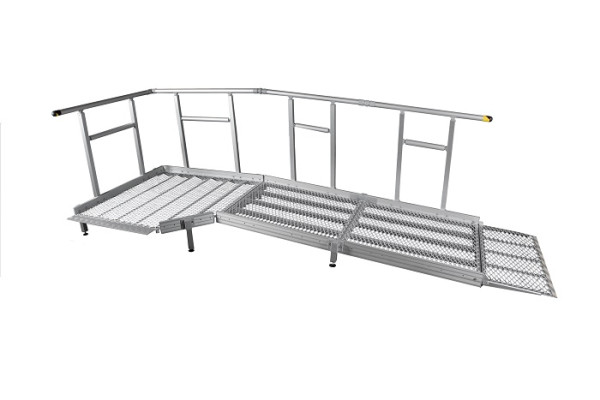
Standard wheelchairs and mobility scooters or electric wheelchairs often require a different type of ramp to accommodate the difference in weight. If you’re looking for a Part M ramp, you’ll need to consider what type of wheelchair you need to provide access for. If it’s a residential property, you may know you only need to provide wheelchair access for one type of wheelchair. Public buildings will usually need a modular ramp that can handle both. This will also affect the width of the ramp you need, and high traffic areas may also want to consider a wider ramp. Additionally, you’ll have to consider the platforms outside the entrance and at the end of each level. Part M disabled ramp regulations outline the minimum standard for platforms to enable wheelchair users to turn safely, but scooters or high traffic areas may also want to think about bigger platform areas.

Pedestrians
Other pedestrians are also still an important consideration when looking at Part M building regulations and wheelchair access. The surface of the ramp needs to be safe for walking pedestrians as well as wheelchair tires, especially as ramps can often collect water and cause the slope to become slippery. Similarly, handrails can be more dangerous than safe without the proper considerations. Children for example often play on the handrails, and gaps in the bars can allow them to fall. Ramps accommodating a high load height may also have gaps underneath the ramp itself and present another potential hazard.
The space
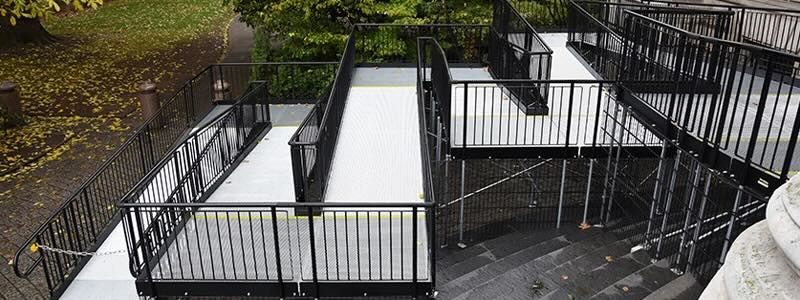
You will also need to consider your load height and how this will affect the overall length of the ramp and the space needed, compared to the space you have. Wheelchair ramp regulations clearly outline safe gradients that need to be adhered to. For tall load heights, this can often result in extremely long ramp lengths which can be a problem for buildings with a smaller outside entrance space. Platforms are needed in these situations to help fit the ramp in, but you will need to think about how obstructive the ramp is and the best way to ensure it stays safe for all users and meets Part M buildings regulations.
The benefits of our Part M ramps
- Complying with disabled ramp building regulations can seem daunting. Fortunately, we have over 25 years’ experience in the industry and work with an experienced partner to guide you through the process from start to finish. We can work with small entrances, high load heights and complex requirements to ensure you meet disabled access ramp building regulations. Working with a partner with building expertise, you’ll enjoy a fast and efficient service for a speedy planning and building process, and we’ll always work to find you the most affordable solution.
Part M Compliance Requirements
- Part M covers various requirements for ramps in homes and public buildings. Part M has a number of volumes depending on property type. Volume 1 focuses on dwellings, volume 2 focuses on buildings other than dwellings.
- Part M for dwellings - For dwellings, such as homes, an external ramp gradient of 1:12 to 1:15 is required depending on the height of the area. The minimum ramp width required is 900mm. For accessible and adaptable dwellings (category 2), the gradient required is between 1:12 and 1:20 depending on the height. Communal approaches required a width of 1200mm. For category 3, which focuses on wheelchair user dwellings, the gradient must not be steeper than 1:15 and the minimum width of the areas should be 1200mm. For all categories, the landing length should be 1200mm.
- Part M for buildings other than dwellings - For buildings other than dwellings, such as public buildings, for external ramps (section 1) the maximum gradient for a ramp varies between 1:12 to 1:20 depending on the height of the area. The ramp width should be 1500mm.
The wheelchair users
- Our Part M Ramps offer you the option to customise the width and our detailed knowledge of safety gradient requirements ensure your ramp is both safe for all users and compliant with Part M building regulations. From our platforms to our ramp lengths, these ramps come at the minimum Part M safety requirements as standard, with the option to customise the measurements to suit your needs and accommodate all wheelchair types. You can also opt for highlighted level changes, with high visibility stickers indicating a change in level to ensure maximum wheelchair safety. This is especially important when the ramp is in use during poor weather or in the evening and night time.

The pedestrians
Because disabled access regulations aren’t just about the wheelchair users, our ramps come with a highly durable slip-resistant surface. Ideal for ensuring safe access during both dry and wet weather, we can also provide a perforated surface to allow any water through. This ensures that the ramp surface doesn’t collect any water and become too slippery. For Part M handrails, we choose from a range of custom options that are compliant with disabled access ramp building regulations with a focus on safety. Opt for infill handrails with a variety of infill bar options to protect all users, particularly children, who could fall. Similarly, an infill skirt on the bottom of the ramp protects the underneath.
The space
Working closely with you from the very start, our qualified team will use your requirements and measurements to produce detailed 3D drawings and plan the right ramp fit for the space. For smaller entrances, we can help to plan out a multi-level ramp solution with a safe gradient and un-obstructive layout. Our qualified partner will then take over the build process. To top it all off, our partner guarantees a high-quality finish and efficient process from start to finish. Made from high-grade materials and fitted by industry professionals, our Part M ramps offer unparalleled quality and affordability.

Comparison of ramp types
Permanent ramps should comply to Part M and Part K building regulations. Modular ramps can be left in place for months or years and can comply to Part M however not all solutions do. Portable ramps, such as folding wheelchair ramps and threshold ramps are designed as temporary access solutions and do not usually comply to Part M.
Part M Ramp Requirements at a Glance
Requirements for Dwellings (Volume 1)
- External ramp gradient of 1:12 (not more than 5m long) to 1:15 (not more than 10m)
- Minimum width of 900mm
- Every flight has a top and bottom landing (platform)
- Intermediate landings are provided where there is a change in direction
- Every landing is a mininium of 1200mm long
Requirements for Buildings (Volume 2)
- External ramp maximum gradient of 1:12 for a 166mm rise, 1:15 for a 333mm rise and 1:20 for a 500mm rise
- Minimum width of 1500mm
- Every ramp has a top and bottom landing, both need to be a minimum of 1200mm long
- Intermediate landings are provided where there is a change in direction, yjese need to be at least 1500mm long
- Handrails on both sides of the ramp
Common Part M compliance mistakes
In some instances, ramps are constructed without fully meeting Part M requirements, resulting in accessibility barriers for wheelchair users and mobility scooter users. Common issues reported by users of non-compliant ramps include excessively steep gradients, insufficient landing areas, inadequate ramp widths and poor drainage, all of which can affect safety and usability.
- Excessively steep gradients – A ramp that is too steep can be difficult or impossible to use safely. Mobility scooters may ground out due to limited clearance, wheelchair users may not have sufficient strength to propel themselves up the ramp, and many users may feel unsafe when navigating a steep incline.
- Insufficient landing areas – Without a suitable landing or platform, users may be unable to remain stationary while opening or closing a door, making independent access difficult.
- Inadequate ramp width – Narrow ramps can prevent wider wheelchairs, mobility scooters, and other mobility aids from using the ramp safely. Users may also be at greater risk of striking the ramp edges during use.
- Poor drainage and surface conditions – Inadequate drainage can lead to standing water, creating slippery surfaces that increase the risk of slips, falls, and loss of traction.
Request a callback
Simply call one of our friendly sales team to start discussing your Part M compliant wheelchair access solution today. Alternatively, if you’re looking for a more temporary solution that doesn’t need to be Part M compliant, our modular wheelchair ramp offers a similarly high-quality finish. Our team is available throughout the week to help via phone, email, live chat or WhatsApp. If you’d rather we call you, you can easily request a callback here.
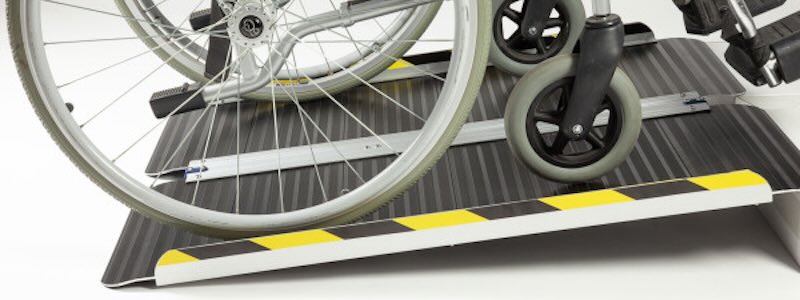
Portable vs Permanent Wheelchair Ramps: Pros and Cons
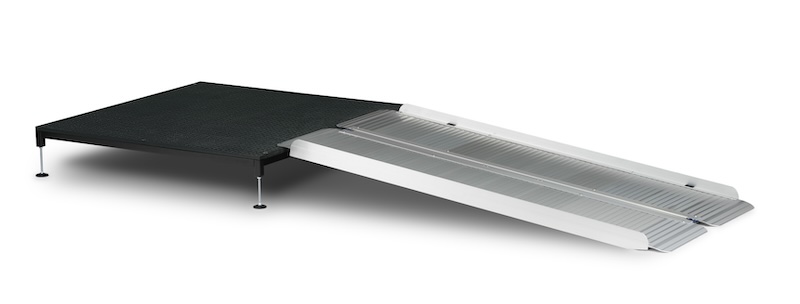
Wheelchair Turning Platforms: Access Solutions for Tight Spaces

How to Choose the Right Wheelchair Ramp for Your Needs
- Categories:
- All
- Vehicle & Plant Loading Ramps
- Wheel Stops
- Workplace Safety
- Speed Bumps
- Accessibility & Disability
- Wheelchair Threshold Ramps
- Truck & Van Ramps
- Cable Covers & Protectors
- Road Safety
- Yard & Container Ramps
- TRP News
- Pet Ramps
- Car Ramps
- Tips and Product Guides
- Customer Case Studies
- Wheelchair Ramps
- Loading Ramps
- Workplace and Health & Safety